The Difference Between White, Brown, and Turbinado Sugar on the Smoker
(And How to Prevent the Burn)
Sugar is the backbone of traditional American BBQ. It balances aggressive salt, mellows out cayenne heat, and is the primary building block for a killer bark. But it is also the number one reason backyard cooks end up with bitter, black, scorched meat.
When developing specialized dry rub formulations, the choice of sugar is just as critical as the choice of chili powder or salt. Not all sugars react to heat the same way. Throw the wrong sugar on a hot grill, and it will turn into a layer of acrid black carbon before your meat is even halfway done.
If you want to master bark formation and stop ruining racks of ribs, you need to understand the thermodynamics of sugar. Here is the exact breakdown of white, brown, and turbinado sugar, how they behave on a smoker, and the techniques required to keep them from burning.
The Big Three: Choosing Your Sugar
1. White Sugar (Refined)
- The Profile: Pure sweetness. Fast-dissolving fine granules.
- The Smoker Behavior: White sugar is highly refined, meaning it has zero moisture and zero molasses. Because the granules are so fine, they melt almost immediately upon hitting the heat.
- The Verdict: Avoid it for low-and-slow barbecue. White sugar offers no complex flavor profile—it just adds one-dimensional sweetness. Worse, its rapid melting point means it burns incredibly fast if your fire spikes. Save the white sugar for your iced tea, not your pork butt.
2. Brown Sugar (Light & Dark)
- The Profile: Deep, caramel sweetness. Clumpy and moist.
- The Smoker Behavior: Brown sugar is simply refined white sugar with molasses added back into it. That molasses is the secret weapon. It provides a deeper, earthier flavor that pairs perfectly with hickory or pecan smoke. More importantly, the moisture from the molasses helps the rub adhere to the meat and slightly delays the burning process.
- The Verdict: The industry standard for pork and poultry rubs. Dark brown sugar has more molasses than light, meaning a stronger flavor and a darker, heavier bark. However, it will still burn if your smoker creeps past 300°F.
3. Turbinado Sugar (The Pitmaster’s Secret)
- The Profile: Subtle molasses flavor. Large, coarse, amber-colored crystals (often sold as “Sugar in the Raw”).
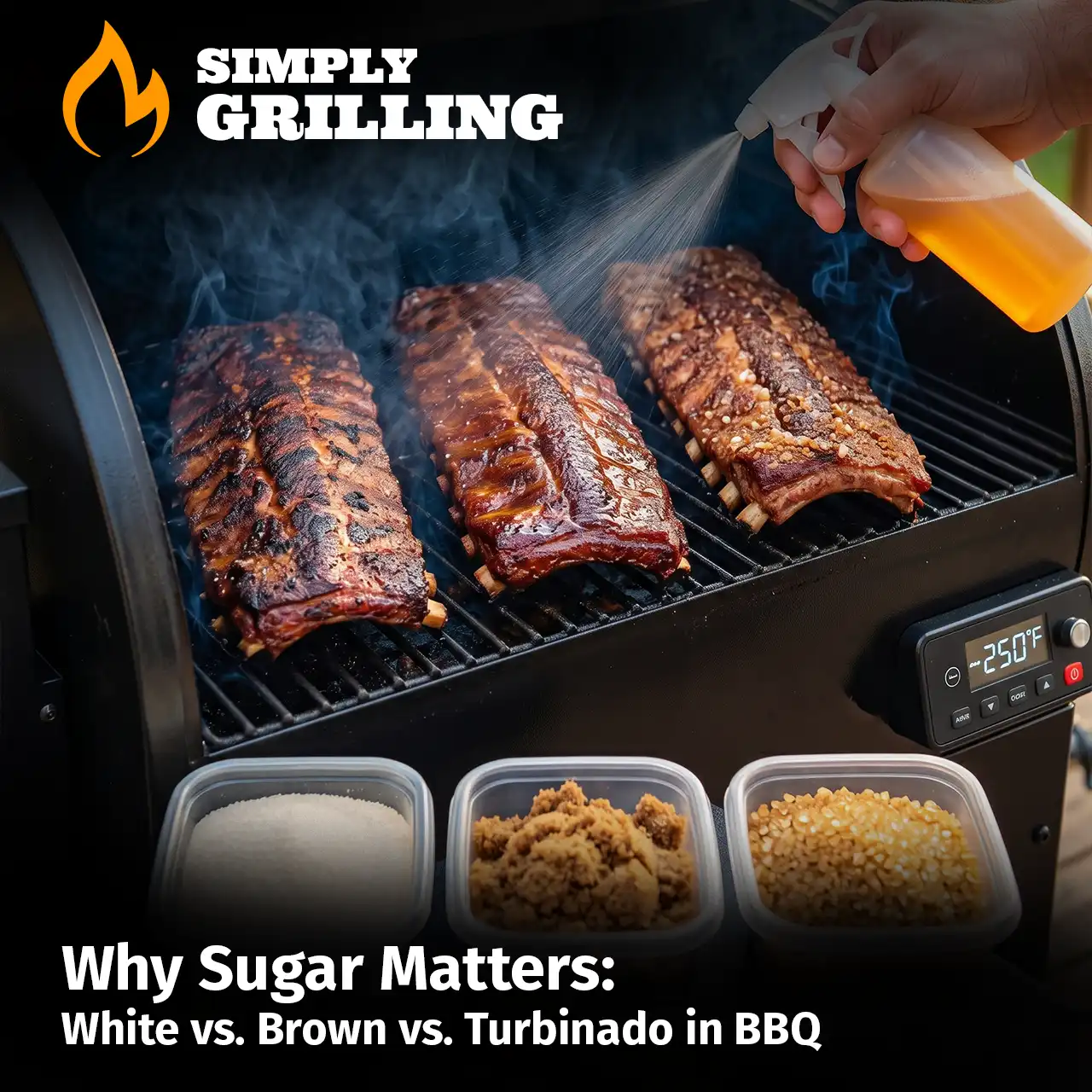
- The Smoker Behavior: Unlike brown sugar, turbinado is only partially refined, retaining its natural molasses in large, hard crystals. This is the holy grail for specialized dry rubs. Because the crystals are so large, they melt significantly slower than brown or white sugar. As they slowly render down over hours in a pellet smoker or offset, they mix with the rendered animal fat to create a thick, crunchy, almost glass-like crust.
- The Verdict: The ultimate choice for long cooks. If you are cooking a brisket or a large pork shoulder that will be exposed to heat for 10+ hours, turbinado is your best friend. It provides the highest resistance to burning while delivering elite bark texture.
How to Stop Sugar From Burning
Understanding your sugar is only half the battle. If you are running a sugar-heavy rub, you must manage your cooking environment. Sugar caramelizes beautifully around 320°F, but it crosses the line into burnt, bitter carbon at 350°F. Here is how you protect your bark:
1. Respect the 275°F Rule
If you are using a rub heavily based on brown sugar, keep your smoker temperature strictly between 225°F and 275°F. If you try to cook hot-and-fast at 325°F+ with a sugary rub, the radiant heat will scorch the surface before the internal temperature of the meat ever reaches your target.
2. The Cooling Spritz
As moisture evaporates from the surface of the meat, the bark begins to dry out and heat up. This is when sugar burns. To prevent this, keep a spray bottle filled with 50/50 apple cider vinegar and water. Once the bark is set (usually around the 2-hour mark), give the meat a light spritz every 45 minutes. The liquid cools the surface temperature of the sugar, entirely preventing it from crossing the burning threshold.
3. Wrap Before It Scorches
You have to use your eyes. If your ribs are at 160°F internally, but the sugar in the rub is already turning a dark mahogany and threatening to turn black, it is time to intervene. Wrap the meat in foil or pink butcher paper. This shields the sugar from the direct convection heat of the smoker and stops the darkening process immediately.
4. The End-Game Glaze
If you want a sticky, sweet barbecue sauce finish, never apply it at the beginning of the cook. BBQ sauce is packed with sugar. If you apply it on hour one, it will be charcoal by hour three. Wait until the final 15 to 20 minutes of the cook, brush on your glaze, and let the heat tack it up just until it bubbles.
Essential Gear for Bark Management
Ditch the refined stuff for your long brisket cooks. Coarse turbinado sugar crystals melt slower, resist burning at higher temperatures, and create that thick, crunchy, glass-like bark that pitmasters chase.
Check Price on AmazonA cheap plastic spray bottle will melt near your firebox. Get an adjustable, heavy-duty trigger sprayer to hit your ribs with apple cider vinegar to keep the surface temps down and prevent sugar from scorching.
Check Price on Amazon