A Guide to Fire Management
How to Maintain the Perfect 225°F in a Smoker
Anyone can light a fire. But it takes a true pitmaster to tame one.
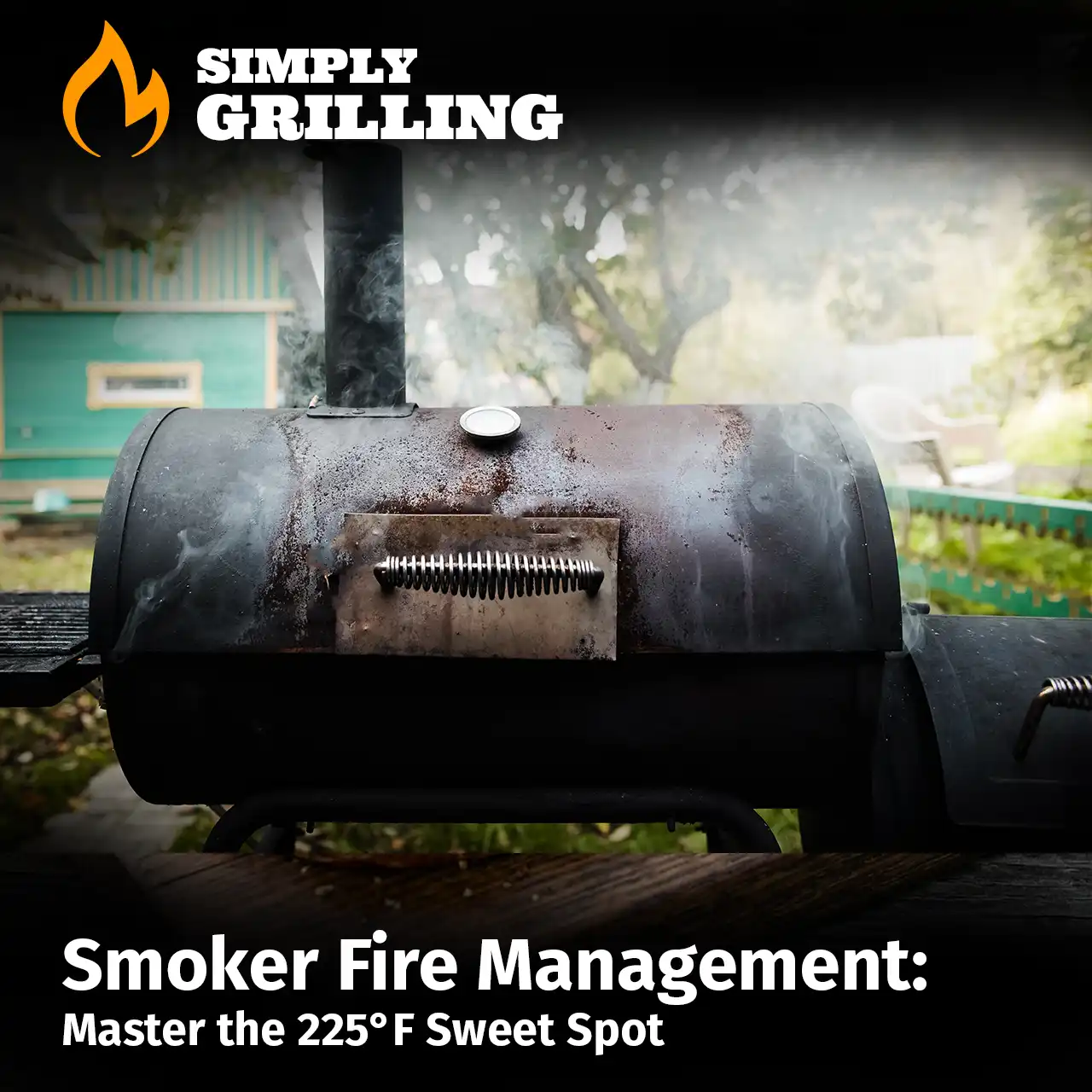
For beginners using offset smokers, Weber Smokey Mountains (bullets), or Kamado-style ceramic grills, fire management is the single biggest hurdle. You spend hours watching the thermometer spike to 300°F, panic, choke the fire out, and drop to 150°F. It is a frustrating, exhausting cycle that results in tough meat and bitter, dirty smoke.
Forget the “set-it-and-forget-it” electric ovens for a moment. Managing a live fire is a primal craft. It requires understanding the relationship between fuel and oxygen.
Here is the uncompromising guide to locking in that perfect 225°F–250°F zone and holding it there for a 12-hour brisket cook.
The Philosophy of Fire: Oxygen is Your Gas Pedal
A fire needs three things to burn: heat, fuel, and oxygen. In a smoker, your fuel (charcoal/wood) is a constant. The only variable you have control over is oxygen.
Your smoker has two sets of vents (dampers):
- The Intake (Bottom Vent): This is your throttle. It dictates how much oxygen enters the firebox.
- The Exhaust (Top Vent): This creates the “draft.” It pulls oxygen over the fire and draws the smoke across your meat before exiting.
The Golden Rule of Vents:
Leave your top exhaust vent wide open (or at least 80% open) at all times. Choking the top vent traps stale, bitter smoke inside the chamber, ruining your meat. Control your temperature exclusively with the bottom intake vent.
The Gear: Uncompromising Fire Control Tools
You cannot manage what you cannot measure. Relying on the cheap, bi-metal dome thermometer that came with your grill is a recipe for failure—they are notoriously inaccurate and measure the air temperature inches away from the meat.
- The Brain: Multi-Probe Wireless BBQ Thermometer. You need one probe clipped directly to the grill grate next to the meat (to measure ambient pit temp) and one inside the meat. This allows you to monitor the fire without opening the lid.
- The Ignition: Heavy-Duty Charcoal Chimney Starter. Never use lighter fluid. It imparts a chemical taste. A chimney starter uses newspaper or a tumbleweed to cleanly light your coals.
- The Protection: High-Heat Leather Grill Gloves. When you need to adjust glowing hot vents or add a split of hardwood, you need serious protection.
Step 1: The Setup (The Minion Method)
The biggest mistake beginners make is lighting all their charcoal at once. If you do that, it will burn hot and fast, and you will never get the temperature down. To maintain a low, slow burn for 10+ hours, you must use the “Minion Method.”
- Fill your charcoal basket or fire ring with unlit charcoal briquettes or lump charcoal. Nestle 2 to 3 chunks of your preferred smoking wood (like hickory or post oak) into the unlit pile.
- Using your chimney starter, light a very small amount of charcoal—about 15 to 20 briquettes.
- Once those briquettes are ashed over and glowing red, pour them directly on top of (or nestled into the corner of) the unlit charcoal.
- The lit coals will slowly ignite the unlit coals underneath them over the course of the day, acting like a slow-burning fuse.
Step 2: Catch the Temp on the Way Up
It is infinitely easier to bring a fire up to temperature than it is to cool down a massive, raging fire.
- Open both your top and bottom vents 100%.
- Watch your grate-level ambient thermometer closely.
- When the temperature hits 175°F (about 50 degrees away from your target), it is time to engage the brakes.
- Close your bottom intake vent until it is only about 1/4 to 1/8 of the way open. (Leave the top vent open!).
- The temperature rise will stall and slowly creep up to your 225°F target.
Step 3: Stop Chasing the Needle
Once you hit 225°F, you will inevitably see slight fluctuations. It might dip to 215°F or rise to 240°F. Do not panic, and do not touch the vents.
- The 15-Minute Rule: When you adjust a vent, it takes the fire at least 15 minutes to respond. If you open a vent, wait 5 minutes, see no change, and open it more, you will overshoot your target by 50 degrees. Make a micro-adjustment (tap the vent a millimeter) and walk away for 15 minutes.
- Trust the Range: Professional pitmasters do not stress over a static number. Barbecue happens in a range. Anywhere between 225°F and 275°F is perfectly acceptable for making world-class smoked meat.
- If you’re looking, you ain’t cooking: Every time you open the lid, you feed the fire a massive rush of oxygen. This causes the fire to spike while simultaneously letting all the heat out of the cooking chamber. Keep the lid closed.
The Bottom Line
Maintaining 225°F is not about finding a magic vent setting; it is about establishing a rhythm. By starting with a small, manageable fire, catching your temperature on the way up, and making micro-adjustments with your bottom intake vent, you transition from someone who just cooks outside to a true manager of live fire.