Low and Slow: The Secret to Melt-in-Your-Mouth Texas Brisket
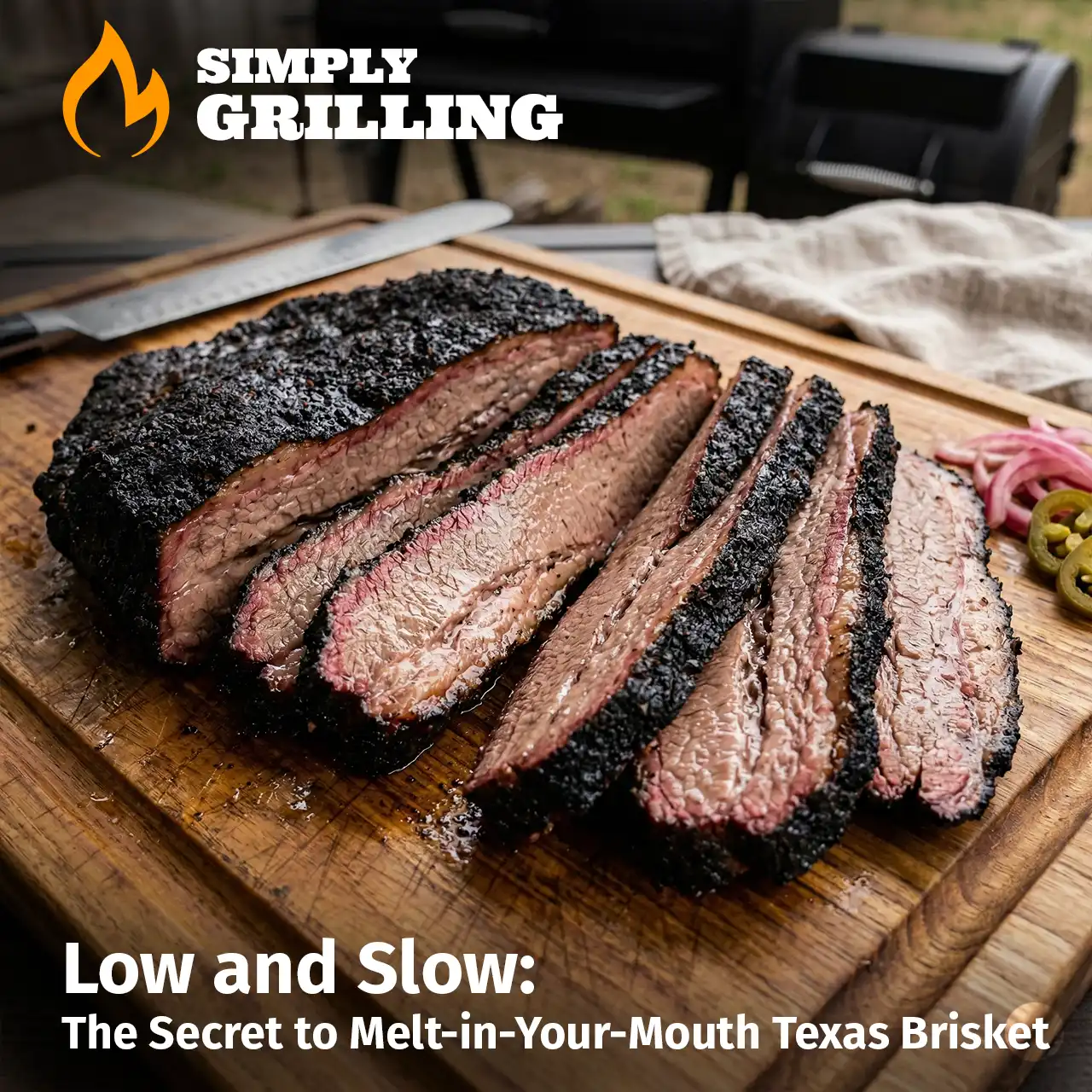
Skip the sauce and let the post oak do the work. This traditional Texas brisket recipe focuses on simple seasonings and a long rest to ensure every slice is tender, rendered, and packed with flavor.
Prep Time:
45-60 mins
Cook Time:
12–16 hours
Ingredients
- 1 - Whole Packer Brisket (12–15 lbs): Look for a "Prime" grade if possible; the marbling is key for Texas style.
- ½ cup - 16-mesh Coarse Black Pepper
- ½ cup - Kosher Salt (Diamond Crystal is a BBQ favorite)
- The Spritz - 1 cup Water or a mix of Apple Cider Vinegar and water
Instructions
The Trim
Step 1
Cold brisket is easier to trim. Remove the hard "deckle" fat and square off the edges. Trim the fat cap down to a uniform 1/4-inch thickness. Your goal is an aerodynamic shape that prevents thin edges from burning.
The Seasoning
Step 2
Apply your salt and pepper rub generously. Texas style means a heavy coat—you should still see some meat through the pepper, but it should be a "heavy grit" texture. Let it sit at room temperature while the smoker heats up.
The Smoke
Step 3
Preheat your smoker to 225°F–250°F. Use Post Oak wood if available for that authentic Central Texas flavor. Place the brisket on the smoker (fat side up or down depending on your heat source) and leave it alone for the first 3 hours.
The Spritz
Step 4
After 3 or 4 hours, start checking the bark. If edges look dry, spritz them with water or ACV. Do this every hour until the internal temperature reaches about 165°F.
The Wrap (The Stall)
Step 5
When the brisket hits the "stall" (where the temp stops rising) and the bark is dark and set, wrap it tightly in pink butcher paper.
The Finish
Step 6
Return the wrapped brisket to the smoker. Continue cooking until the internal temperature reaches 200°F–205°F. The real test is "probe tenderness"—the thermometer should slide into the flat like it’s hitting room-temperature butter.
The Rest
Step 7
This is the most important step. Wrap the paper-covered brisket in a towel and place it in an empty cooler (no ice!) for at least 2 hours. This allows the muscle fibers to relax and reabsorb the juices.
The Pitmaster’s Toolkit
Precision is everything when dealing with a 12-hour cook. These are the specific tools I use to ensure a perfect result every time:
- Victorinox 6-Inch Curved Boning Knife: Essential for a clean, aerodynamic trim. Its semi-stiff blade allows you to navigate the fat and deckle with professional accuracy.
- Thermapen ONE Instant-Read Thermometer: The gold standard for speed and accuracy. You need to know exactly when your brisket hits that 203°F sweet spot without losing heat by keeping the lid open.
- Bryco Pink Butcher Paper: Unlike foil, butcher paper allows the meat to breathe. It protects the bark while allowing smoke to penetrate, preventing the “pot roast” texture common with foil wraps.
- Victorinox 12-Inch Granton Edge Slicing Knife: Don’t ruin your hard work with a dull knife. This long blade allows for single-stroke, uniform slices that showcase the smoke ring and fat render.
Pro-Tip for Florida Pitmasters: In our humid climate, keep an eye on your fire management. Humidity can affect how your wood burns, so ensure you have plenty of airflow to keep the smoke “blue” and thin, rather than thick and white.
Pro Tip:
Slicing Direction: Always slice against the grain. Remember that the grain of the “Flat” and the “Point” (the two muscles of the brisket) run in different directions. You’ll need to rotate the brisket 90 degrees once you reach the halfway point.