A flat-top griddle is one of the most powerful tools in an outdoor cook’s arsenal. When treated with respect, that expansive sheet of rolled steel will deliver the ultimate smashed burger crust, a flawless edge-to-edge steak sear, and the perfect diner-style breakfast.
But raw steel is vulnerable. To unlock its true potential, you must forge a protective layer—a dark, unyielding patina that renders the metal naturally non-stick and impervious to rust. This process is called “polymerization,” where high heat bonds liquid oil directly to the iron.
Here is the uncompromising guide to seasoning your new flat-top and the daily rituals required to maintain it for generations.
Phase I: The Initial Strip
*This step is ONLY for brand-new griddles.*
When your griddle arrives from the factory, it is coated in a protective, food-safe shipping oil designed strictly to prevent rust during transport. You do not want to cook on this. You must strip it down to the raw metal.
- Fill a bucket with hot water and a generous squirt of a powerful grease-cutting soap, like Dawn Ultra Dish Soap. (Note: This is the ONLY time soap should ever touch your griddle).
- Scrub the entire surface, including the outside edges, with a sponge or scouring pad.
- Rinse it completely clean with fresh water and dry it immediately with a paper towel. Raw steel oxidizes fast, so do not let water sit on the surface.
Phase II: The Forge (Seasoning the Steel)
Now that the metal is raw and porous, it is time to build the foundation. You need an oil with a very high smoke point. Standard olive oil or butter will burn and flake. We highly recommend Chosen Foods 100% Pure Avocado Oil or a dedicated conditioner like the Blackstone Cast Iron Seasoning & Conditioner.
- Bring the Heat: Turn all your burners onto high and let the raw steel heat up for 10-15 minutes until it starts to discolor and darken.
- Apply the Cure: Squirt a thin zig-zag of your chosen oil across the surface.
- The Even Coat: Using a pair of heavy-duty tongs and a folded set of Lint-Free Cotton Shop Towels (or thick paper towels), spread the oil into a razor-thin layer over every square inch of the metal, including the inner and outer walls.
- The Burn-Off: Step back and let the oil smoke. It will billow white smoke for about 10 to 15 minutes. Wait until the smoke completely stops.
- Repeat the Ritual: The steel will have turned slightly darker. Repeat steps 2 through 4 at least three to four more times. By the final coat, your griddle should be a deep, glossy, impenetrable black.
The Crucial Rule:
If the oil looks wet or pools up, you used too much. It should look like the surface is just barely damp before the burn-off.
Phase III: The Pitmaster’s Post-Cook Ritual
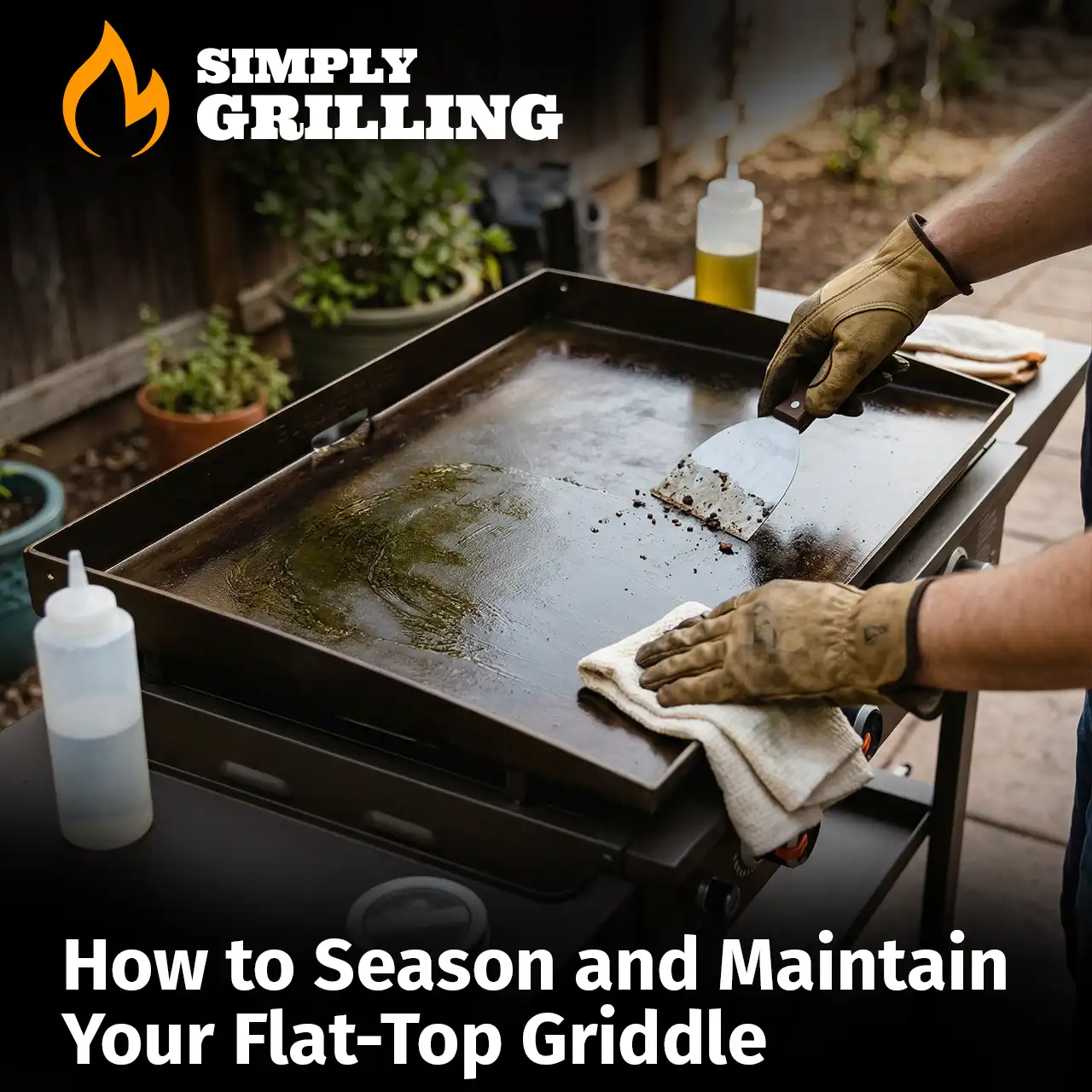
A well-seasoned griddle doesn’t require soap or harsh chemicals. Maintaining it is a simple matter of respecting the steel after every single cook. To do this right, you need two essential tools: a heavy, rigid scraper like the Cuisinart Commercial Griddle Scraper and a pair of commercial Plastic Squeeze Bottles (one filled with water, one with your high-heat cooking oil).
- The Scraping: While the griddle is still warm (but the burners are off), use your rigid scraper to firmly push all the leftover food debris and excess fat into the grease trap.
- The Steam Clean: If there is stubborn, caramelized sugar or sticky marinade left behind, squirt a small amount of water from your squeeze bottle onto the hot steel. The water will instantly boil and lift the debris, allowing you to easily scrape it away.
- The Final Wipe: Take a clean towel, wipe up any remaining moisture, and ensure the surface is dry.
- The Protective Coat: Squirt a quarter-sized amount of oil onto the warm steel and wipe it down with a towel, leaving a microscopic layer of oil to protect the iron from the elements until your next cook.
Phase IV: The Rescue (Restoring a Neglected Griddle)
If you accidentally let your griddle sit through a rainy week without its protective oil coat, you might find surface rust. Do not panic. It is solid steel; it can be brought back from the dead.
You will need an abrasive tool designed specifically for this, like a Commercial Flat-Top Grill Brick.
Pour a generous amount of cooking oil over the rusted areas, and use the grill brick to scrub the steel in tight circles. The brick will grind away the rust and lift it into the oil. Wipe the filthy oil away with paper towels, repeat if necessary until the metal is clean, and then start the Phase II Seasoning Process over from scratch.