Stop serving dry fish. Master the technique of the skin-side sear with our grilled salmon recipe. Learn the exact temperatures and tools needed for restaurant-quality results.
Prep Time:
Cook Time:
Serves:
Difficulty:
Stop overcooking your fish. If your salmon looks like a dry, chalky brick of orange protein, you’ve already lost.
Salmon is one of the most rewarding proteins to grill, but it is also the most abused. Most people cook it until the white albumin (the protein moisture) starts leaking out like a broken pipe, leaving you with fish that tastes like wet cardboard. To do this right, we treat the skin like a cast-iron sear and the flesh like a delicate steak.
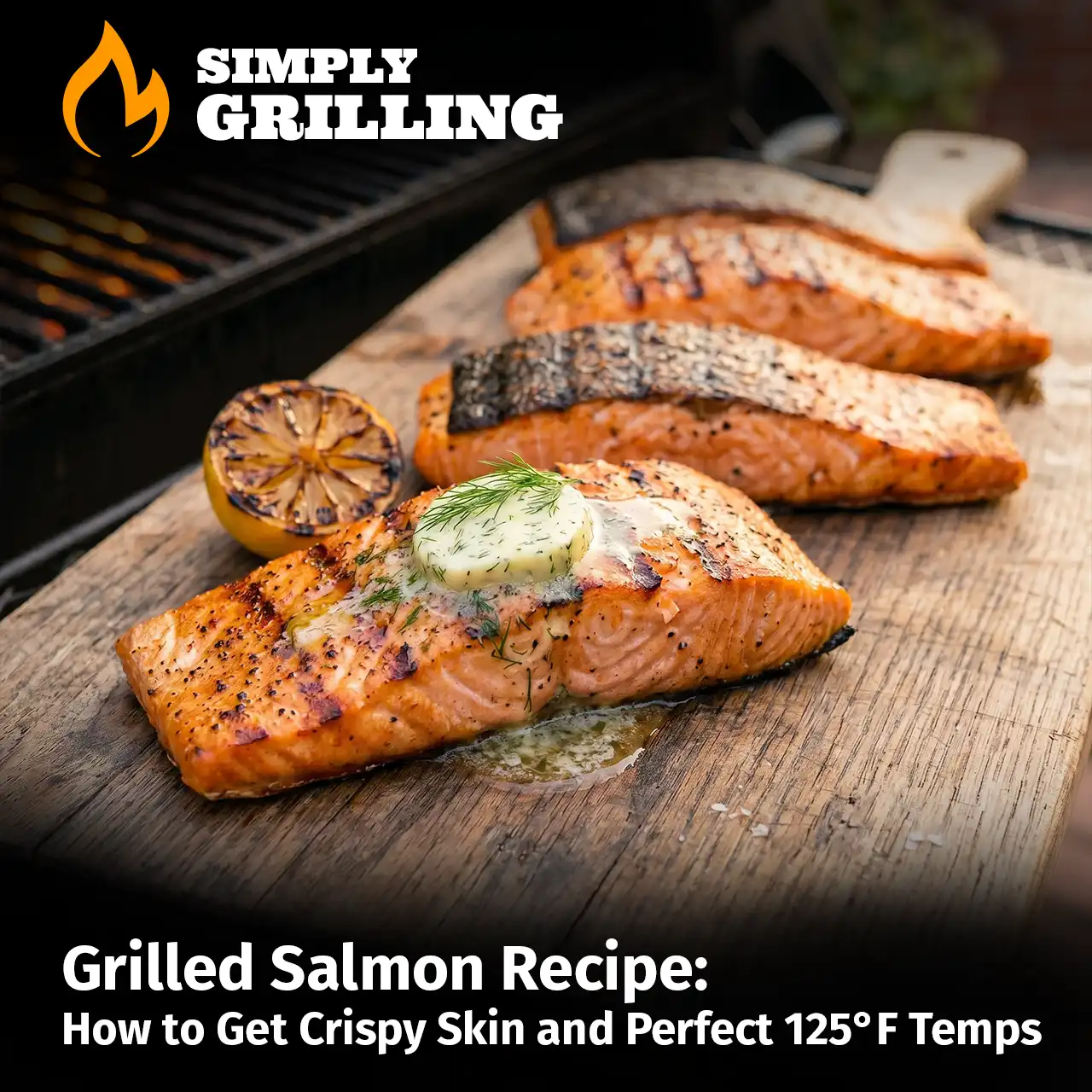
We are aiming for a crispy, potato-chip skin and a center that is just barely opaque. This is not about “well-done.” This is about precision.
Precision is the difference between a masterwork and a mess. You need these in your kit.
You have a 30-second window between “perfect” and “overcooked.” You need a professional-grade probe that gives you a reading in under 2 seconds. Guessing internal temp on salmon is how you end up with dry fish.
Check Price on ThermoworksStandard spatulas are too thick and will tear the skin off the meat. You need a thin, beveled, flexible fish spatula that can slide between the grate and the skin effortlessly.
Check Price on AmazonFor fish, “clean” isn’t enough; the grates need to be pristine. Use a high-quality scraper or bristle-free brush to remove every bit of carbon before you lay the fillets down.
Check Price on Amazon