Mastering the fire is about more than just raw heat; it is about control. If you have ever served a chicken breast that was charred black on the outside but raw in the center, you have experienced the failure of single-zone cooking.
At Simply Grilling, we consider Two-Zone Grilling to be the “Day One” skill every pitmaster must master. It is the bridge between simple “grilling” and true “barbecue.”
What is Two-Zone Grilling?
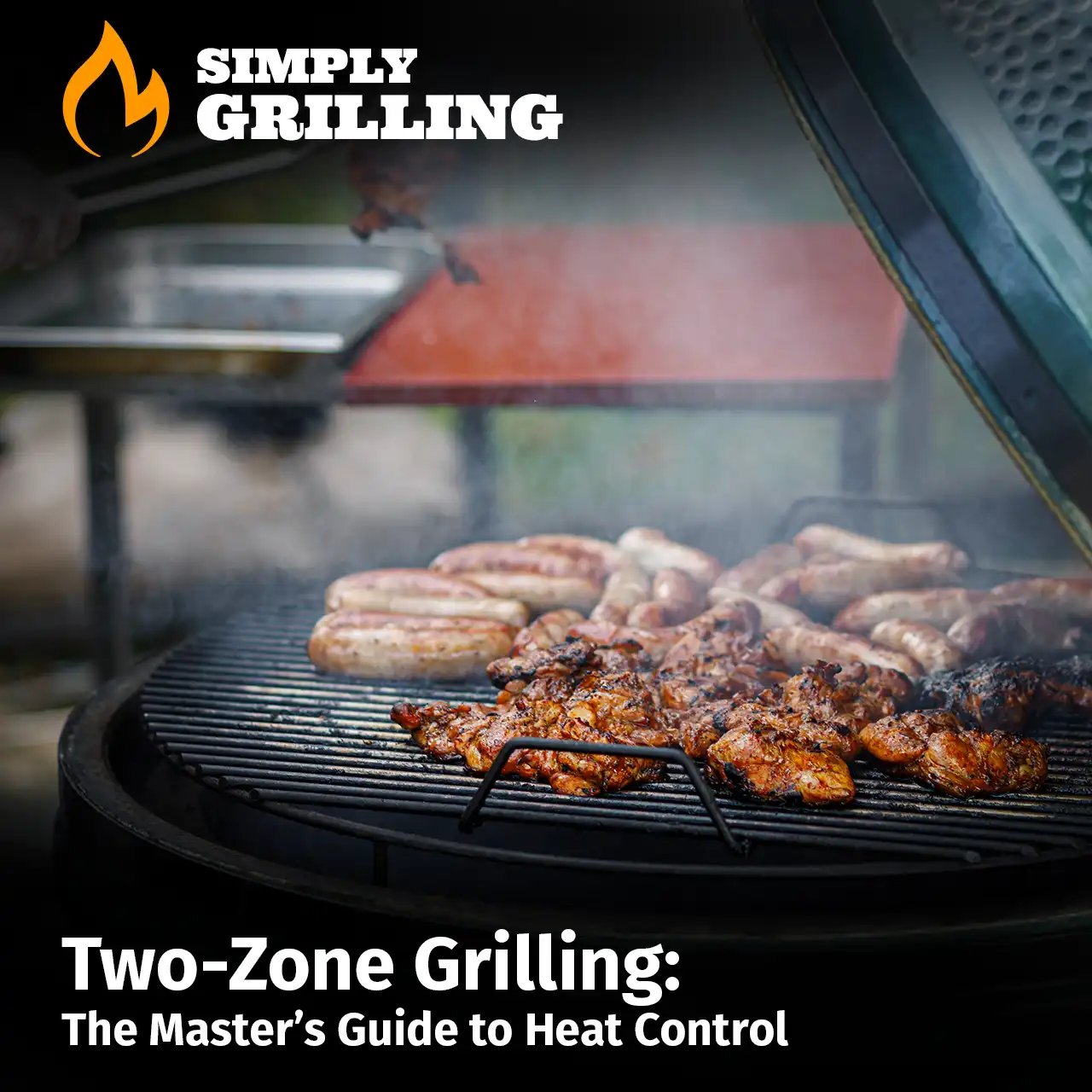
The concept is simple: you divide your grill into two distinct temperature environments.
- The Direct Zone (Hot): This is where your meat sits directly over the heat source (charcoal, gas burners, or searing element). It is used for high-heat searing, creating the Maillard reaction, and getting those perfect grill marks.
- The Indirect Zone (Cool): This area has no heat source directly beneath it. The meat cooks via convection (hot air circulating) rather than radiant heat. This is where you roast, bake, or “park” meat to finish cooking without burning the exterior.
How to Set Up Your Grill
The method depends on your equipment, but the goal is always to create a “safe haven” for your food.
Charcoal Grills (The Kettle Style)
Pile all your lit coals onto one half of the charcoal grate, leaving the other half empty. Use your vents to control airflow and stabilize your temperature.
- Direct: Directly over the glowing coals.
- Indirect: The “cold” side with no coals.
Gas Grills
Turn on the burners on one side to medium-high and leave the burners on the far side completely off.
- Direct: Over the active burners.
- Indirect: Over the unlit burners with the lid closed.
Pellet Grills & Smokers
Most pellet grills are naturally indirect because of the heat deflector plate. However, you can create a two-zone effect by placing meat further away from the firebox or using a “searing station” if your model allows for a sliding plate.

Visualizing the Setup: Reference this diagram to visualize how your grill should look for charcoal and gas two-zone setups.
The Two-Zone Cheat Sheet
Not every cut of meat belongs over the fire for the entire cook. Use this table as a guide:
| Meat Type | Start In… | Finish In… | Why? |
|---|---|---|---|
| Thick Steaks (1.5″+) | Indirect Zone | Direct Zone | The “Reverse Sear” ensures edge-to-edge pink. |
| Chicken Quarters | Indirect Zone | Direct Zone | Renders fat slowly before crisping the skin. |
| Burgers / Hot Dogs | Direct Zone | Indirect Zone | Sear for flavor, move to the cool side to melt cheese. |
| Pork Chops | Direct Zone | Indirect Zone | Prevents the lean meat from drying out. |
| Vegetables | Indirect Zone | Direct Zone | Softens the interior before charring the edges. |
Why This Technique Wins Every Time
- No More Flare-Ups: When fat rendered from a ribeye hits a flame, it flares up. With two-zone cooking, you can simply slide the steak to the indirect side until the fire dies down.
- Temperature Accuracy: It allows you to use your **instant-read thermometer** effectively. You can roast the meat to within 5–10 degrees of your target, then sear it to finish.
- The “Holding” Area: If your corn is done but your brisket needs 20 more minutes, the indirect zone is the perfect place to keep food warm without overcooking it.
Pitmaster Tip: The Lid is Your Dial
In two-zone cooking, your grill lid acts as your oven door. When the lid is closed, the heat from the direct side reflects off the top and circulates around the meat on the indirect side. If you’re lookin’, you ain’t cookin’. Keep that lid down to maintain the convection.