Carryover Cooking Explained (Or: How to Stop Bleeding Out Your $50 Steaks)
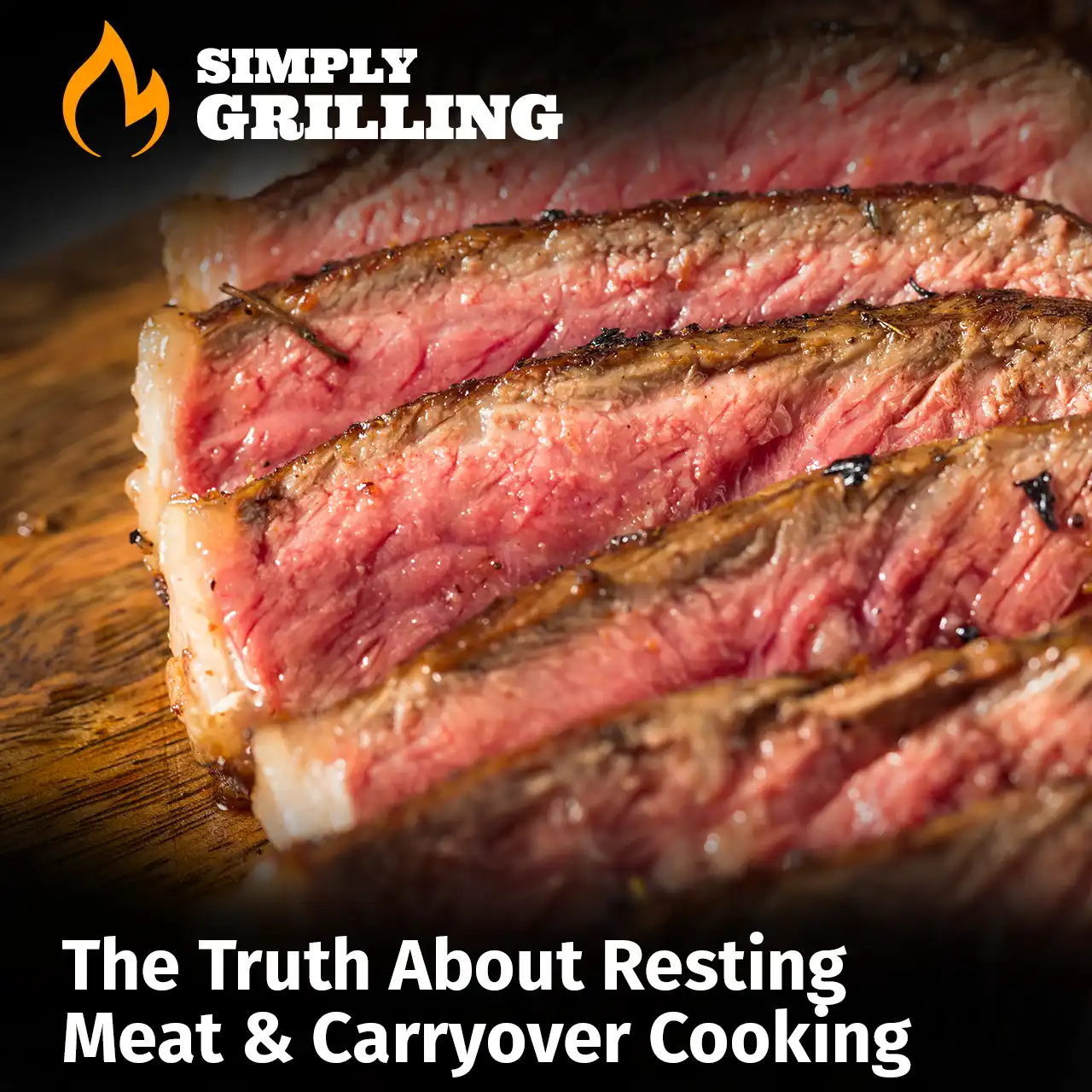
Picture this: You just dropped a stupid amount of money on a prime, dry-aged ribeye. You tended the fire perfectly. You nailed the reverse sear. The crust looks like it belongs in a magazine. You pull it off the grill, slap it on a board, and immediately slice into it like a maniac who hasn’t eaten in a week.
Congratulations. You just murdered your steak.
Watch in horror as a tidal wave of delicious, savory juices violently evacuates the meat, flooding your cutting board and leaving you with a dry, tragic sponge. This is the crime of impatience, and the victim is your dinner. Today, we are learning about the unstoppable physics of carryover cooking and why resting your meat is non-negotiable.
The Freight Train of Thermal Energy
Here is the reality check: your meat does not stop cooking the exact second you take it off the fire. Heat is a physical force, and it moves from the outside (the blazing hot exterior of your food) to the inside (the cooler center).
Think of thermal energy like a freight train. If you kill the engine (take it off the grill), the train doesn’t instantly freeze in place. Momentum carries it forward. When you pull a chicken breast at 160°F, the intense heat trapped in the outer layers of the meat continues to drive inward, pushing the center temperature up to a perfectly safe, juicy 165°F while it sits on your counter.
If you wait to pull your meat until the thermometer reads your target final temperature, you have already overcooked it. It will carry over right past perfection and straight into shoe-leather territory.
Why Slicing Early is a Felony
When meat is on the grill, the muscle fibers tense up like they are stuck in traffic. This intense pressure squeezes the internal moisture directly toward the cooler center of the cut. If you slice the meat right now, you are essentially popping a water balloon. All that moisture has nowhere to go but out.
Resting the meat allows it to cool down slightly. The muscle fibers relax. They take a deep breath. Like a sponge expanding, they reabsorb and redistribute those juices evenly throughout the entire cut. Slicing into a properly rested steak yields a glistening, juicy interior that holds onto its moisture.
The “Pull & Rest” Cheat Sheet
Rule of Thumb: The larger the piece of meat, and the hotter the cooking temperature, the more the temperature will carry over.
-
Steaks & Chops (High Heat Sear):
Pull 5°F to 10°F before your target temp. Rest for 10 minutes. -
Whole Poultry (Roasting Heat):
Pull the breast at 155°F – 160°F. Rest for 20-30 minutes. It will easily carry over to 165°F. -
Huge Roasts & Brisket (Low & Slow):
Pull at texture-probe-tender (usually around 203°F). Rest for a minimum of 1 to 2 hours in a cooler. It needs time to stop panicking.
Gear to Stop You From Ruining Meat
You cannot manage carryover cooking by poking the meat with your finger and guessing. Stop playing games and use the right tools.
The absolute gold standard for tracking a rest is leaving a probe in the meat while it sits on the board. While we heavily favor the bulletproof connection of the ThermoWorks RFX system, if you need something fast with an app interface, a high-quality wireless block is mandatory. Watch the internal temp rise and plateau so you know exactly when it’s safe to slice.
Check Price on AmazonEven a perfectly rested piece of meat is going to drop some liquid when you finally slice it. If you are using a flat plastic board, that liquid is going right onto your floor. Get a heavy block of wood with a deep trench carved into the edge. It looks professional, and it saves your kitchen.
Check Price on AmazonIf you tent resting meat tight with aluminum foil, the trapped steam will instantly destroy the crispy bark you just spent hours building. Pink unwaxed butcher paper breathes. It keeps the heat in to manage the rest without turning your crust into soggy mush.
Check Price on Amazon