Demystifying the Smoke Ring
The Science, Myths, and How to Get It Every Time
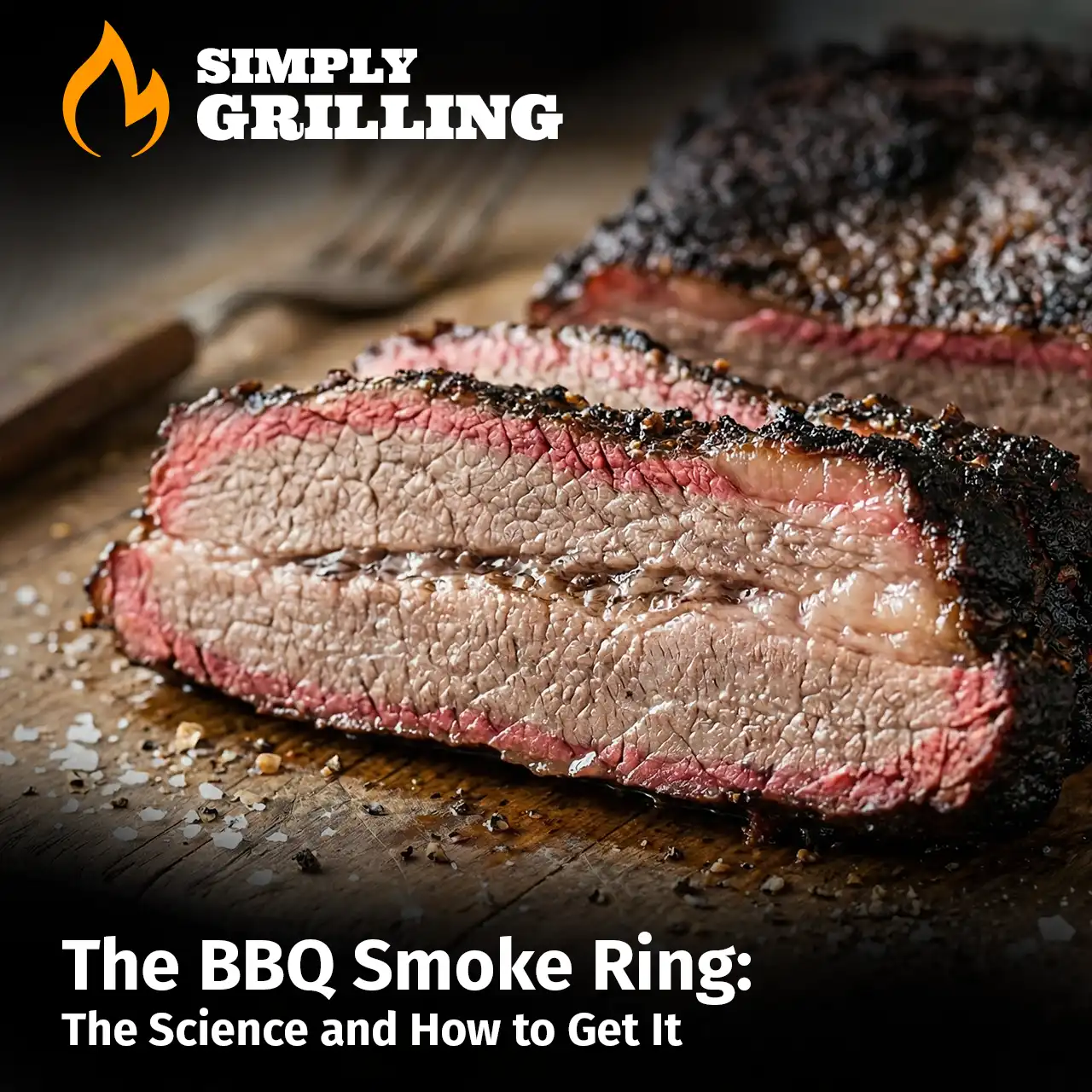
Slice into a perfectly executed brisket, and there it is: a vibrant, glowing pink ribbon hugging the outer crust. The smoke ring. In the world of backyard barbecue, it is the ultimate badge of honor. It commands immediate respect and screams to anyone watching that you have mastered the fire.
But here is the uncompromising truth: the smoke ring has absolutely nothing to do with smoke flavor.
It is purely a cosmetic illusion born of chemistry. However, knowing that doesn’t make us want it any less. We eat with our eyes first. If you want to consistently produce that championship-level pink halo, you need to stop relying on luck and start understanding the science of the pit.
The Chemistry: What is the Smoke Ring?
The red color in raw meat comes from a protein called myoglobin. Normally, when meat is cooked to around 170°F, myoglobin breaks down and turns brown or grey. That is why a well-done steak loses its pink color.
However, when you burn wood or charcoal, it releases gases—specifically Nitric Oxide (NO) and Carbon Monoxide (CO). When these gases hit the surface of your meat, they bind with the myoglobin. This chemical reaction “locks in” the pink color, preventing it from turning brown even when the internal temperature pushes past 200°F.
The 170°F Deadline
This chemical reaction can only happen while the meat is raw and the myoglobin is still intact. Once the surface of the meat hits 170°F, the window slams shut. The gases can no longer penetrate, and the smoke ring stops forming.
Busting the Biggest Myths
-
Myth #1: A deep smoke ring means deep smoke flavor.
False. You can actually fake a smoke ring in an indoor oven using Pink Curing Salt (Prague Powder #1), which is packed with sodium nitrite. It will look like world-class BBQ, but taste like an oven roast. The ring is a chemical reaction, not a flavor profile. -
Myth #2: You need to soak your wood chips to get a good ring.
False. Soaking wood just creates dirty, bitter steam. It lowers the temperature of your fire and produces terrible flavor. You want clean combustion to produce the right gases. -
Myth #3: It penetrates through the fat.
False. The smoke ring only forms in muscle tissue, because that is where the myoglobin lives. If you leave a thick, quarter-inch fat cap on your brisket, you will not have a smoke ring on that side of the meat.
The Playbook: How to Get It Every Time
To maximize the penetration of Nitric Oxide before the meat hits that 170°F deadline, you need to engineer the perfect environment inside your smoker.
- Start with Cold Meat: Do not let your brisket or ribs come up to room temperature. Throw them on the smoker straight from the fridge. Cold meat takes longer to reach 170°F, keeping the window for the chemical reaction open much longer.
- Keep the Surface Wet: Gases need a medium to dissolve into before they can penetrate the meat. A dry surface repels the gas; a wet surface acts like a sponge. Keep a water pan in your smoker to increase humidity, and use a Continuous Spray Bottle to spritz your meat with apple cider vinegar or water every 45 minutes for the first few hours.
- Burn the Right Fuel: Wood chunks and charcoal briquettes produce high levels of nitrogen dioxide compared to electric elements or pure gas flames. If you are using a pellet grill, consider running it on a lower “smoke setting” (around 180°F to 200°F) for the first two hours to maximize gas exposure before cranking the heat.
- Trim Aggressively: Trim your fat cap down to 1/4 inch or less. Remove any silver skin. The gases must have access to the raw muscle fibers to work their magic.
- Track the Temp: Do not guess. Use a high-quality Instant-Read Meat Thermometer. Once the surface of your meat is past 170°F and the bark is set, you can safely wrap it in butcher paper. The smoke ring is already locked in.
The Bottom Line
The smoke ring might be an aesthetic trick, but it’s a trick every serious pitmaster needs in their arsenal. By starting cold, staying wet, and managing your fire, you leverage chemistry to elevate the visual impact of your barbecue. Master these steps, and you’ll never slice into a grey, disappointing brisket again.