If you’ve ever stood at the butcher counter staring at different racks of ribs and wondered which one belongs on your smoker, you aren’t alone. While they both come from the same animal, St. Louis Style and Baby Backs offer completely different experiences in terms of flavor, fat content, and cook time.
Here is everything you need to know to choose the right rack for your next backyard BBQ.
What are Baby Back Ribs?
Despite the name, “Baby Backs” don’t come from piglets. They are called “baby” because they are smaller than spare ribs.
- Location: These are cut from where the rib meets the spine (the loin area).
- Appearance: They are shorter, curved (like a finger), and usually leaner.
- Flavor Profile: Because they are near the loin, the meat is tender and mild.
- Best For: People who prefer a leaner bite and a faster cook time.
What are St. Louis Style Ribs?
St. Louis ribs actually start as Spare Ribs (from the belly side). To make them “St. Louis Style,” the tough brisket bone and cartilage are trimmed away to create a clean, rectangular rack.
- Location: The lower portion of the pig, closer to the belly (where bacon comes from!).
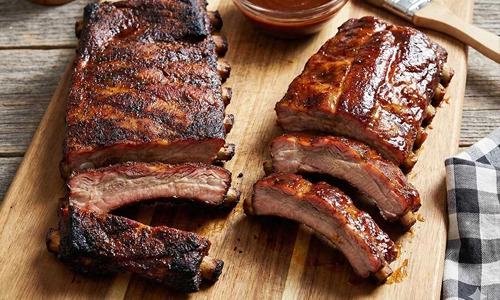
- Appearance: Longer, flatter, and rectangular. They contain more bone and higher fat content.
- Flavor Profile: Because of the extra fat (marbling), these ribs are incredibly flavorful and rich.
- Best For: Those who love a “traditional” BBQ experience with plenty of juicy fat and a uniform shape that cooks evenly.
The Head-to-Head Comparison
| Feature | Baby Back Ribs | St. Louis Style Ribs |
|---|---|---|
| Size | Smaller, tapered (3–6 inches) | Larger, rectangular (uniform) |
| Meatiness | Leaner, tender loin meat | Fattier, richer belly meat |
| Fat Content | Low to Moderate | High (Great for marbling) |
| Cook Time | Faster (~4–5 hours) | Longer (~5–6 hours) |
| Price | Usually more expensive | Generally more budget-friendly |
Cooking Considerations: The 3-2-1 Rule
Timing is everything when it comes to the smoker. Because of their size and fat differences, these ribs handle heat differently:
- St. Louis Ribs are the gold standard for the 3-2-1 method. They have enough fat to withstand 6 hours of heat without drying out.
- Baby Back Ribs are leaner and smaller. If you follow a strict 3-2-1 schedule, you might overcook them. For Baby Backs, I recommend a 2-2-1 or a 3-1-1 method to keep them from becoming mushy.
The Verdict: Which is Better?
- Choose Baby Backs if: You want a quicker cook, a leaner meal, or you’re feeding kids who find smaller ribs easier to handle.
- Choose St. Louis Style if: You want maximum BBQ flavor, a beautiful presentation for photos, and that classic “melt-in-your-mouth” fat rendering.
Regardless of which rack you choose, always remember to remove the silver skin (membrane) on the back. If you leave it on, your rub won’t penetrate the meat, and the ribs will be “chewy” rather than “tender.”