Mastering the Smoke: The Ultimate Beginner’s Guide to Smoking Meat
Smoking meat is less of a recipe and more of a practice. It requires patience, an understanding of fire management, and a willingness to let the meat dictate the timeline.
Whether you’re firing up an offset or dialing in a pellet grill, the fundamentals remain the same. Here is the essential guide to the dos, the don’ts, and the must-know concepts for anyone just getting started in the world of barbecue.
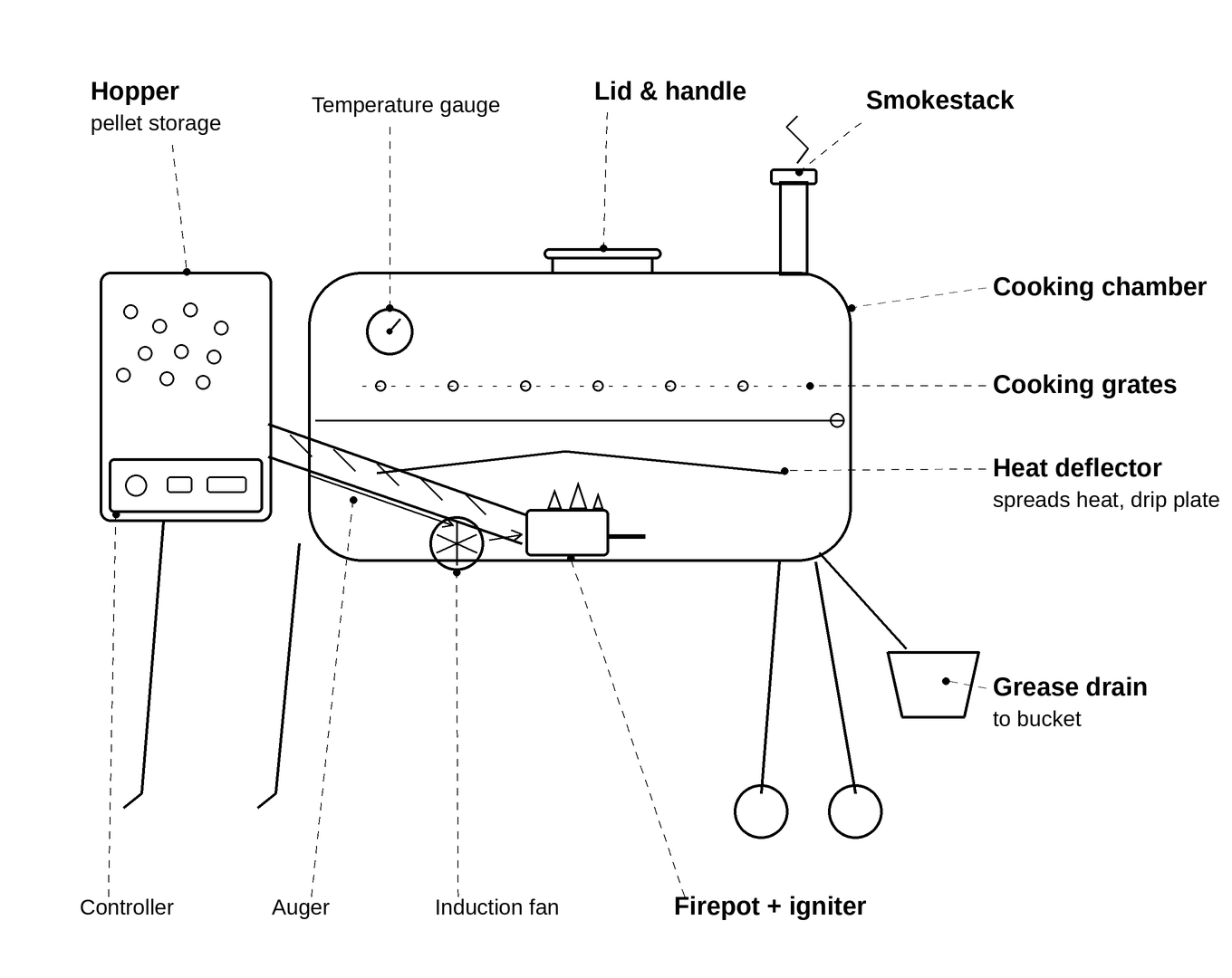
Basic anatomy of a pellet smoker
The “Must-Know” Concepts
Before you put bark on a brisket, you need to understand the physics of what’s happening inside your cooking chamber.
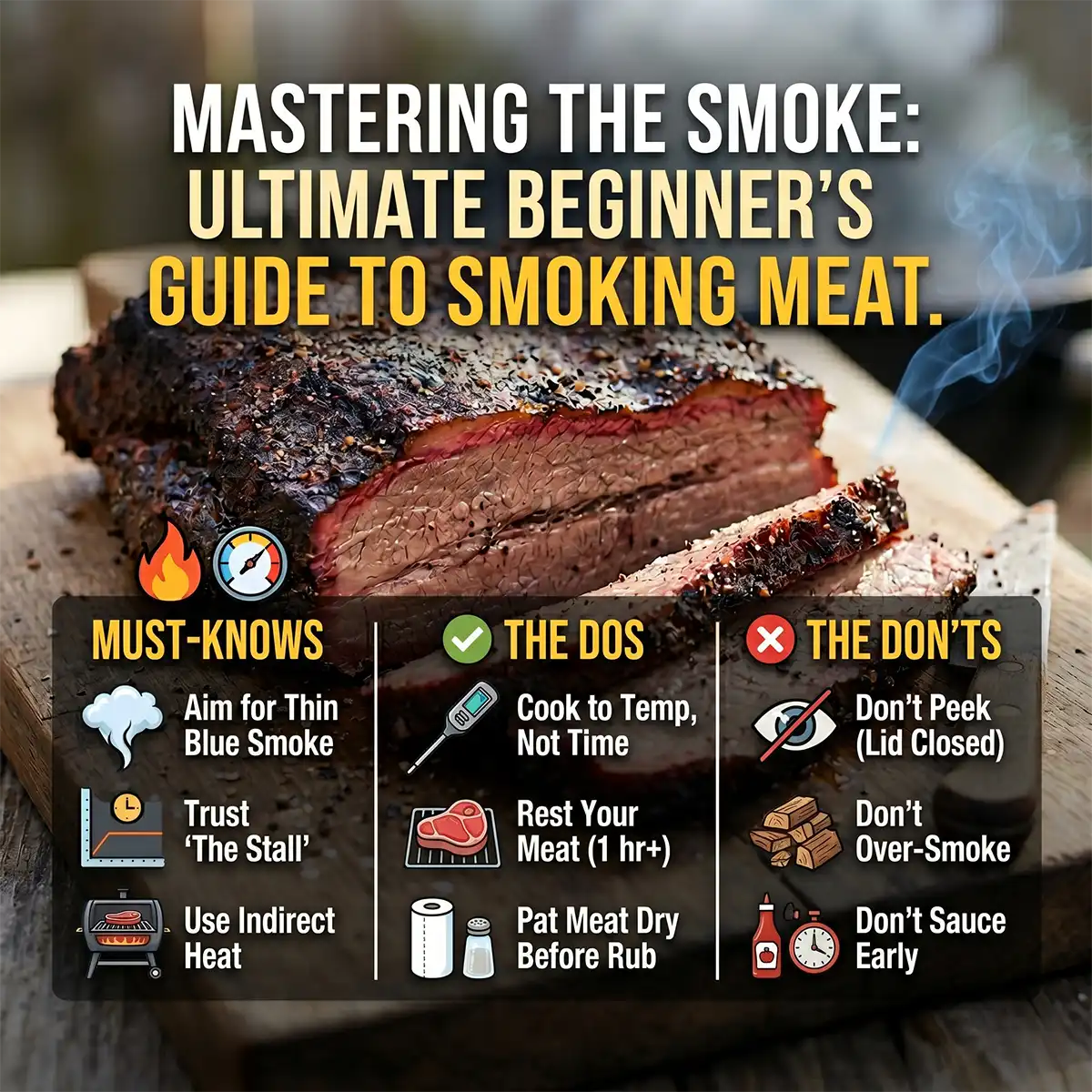
- “Clean” vs. “Dirty” Smoke: This is the most critical concept in barbecue. You do not want thick, billowing white smoke—that is “dirty” smoke, caused by smoldering wood lacking oxygen. It leaves a bitter, ashy taste on the meat. You are aiming for thin blue smoke (or nearly invisible heat waves). This means your fire is burning cleanly and will impart a sweet, savory flavor.
- The “Stall”: When smoking large cuts like pork shoulder or brisket, the internal temperature will steadily rise and then suddenly stop—usually around 160°F to 170°F. It can sit there for hours. This is evaporative cooling; the meat is sweating out moisture, which cools it down as it evaporates. Do not panic and crank the heat. You can either wait it out or wrap the meat in foil or butcher paper (the “Texas Crutch”) to push through it.
- Radiant vs. Indirect Heat: Smoking relies on indirect heat. The fire is built away from the meat, and the heat and smoke are drawn across it. Note that while some indoor ovens use convection fans to circulate air, traditional and standard smokers rely strictly on natural airflow and drafting from the firebox to the chimney.
The Dos: Habits for Success
1. Cook to Temperature, Not Time
“How long will a 10 lb pork butt take?” is the most common beginner question. The answer is: until it’s done. While you can estimate roughly 1 to 1.5 hours per pound at 225°F, every cut of meat is different. Invest in a high-quality, instant-read digital thermometer. You are generally looking for internal temperatures around 200°F-205°F for pulling/slicing meats, where the collagen has fully broken down.
2. Rest Your Meat
Pulling a brisket off the smoker and slicing it immediately is a tragedy. During the cook, muscle fibers tighten and drive moisture toward the center. Resting allows those fibers to relax and redistribute the juices evenly. A pork butt or brisket should rest for at least an hour (often much longer, wrapped in a cooler) before slicing.
3. Dry Your Meat Before Seasoning
Moisture on the surface of the meat prevents a good crust (or “bark”) from forming. Pat your meat completely dry with paper towels before applying your binder (like mustard or oil) and your rub.
The Don’ts: Rookie Mistakes to Avoid
1. Don’t “Look” (If You’re Lookin’, You Ain’t Cookin’)
Every time you open the lid, you let out heat and smoke, stalling the cooking process and causing temperature spikes when the fire suddenly gets a rush of fresh oxygen. Trust your thermometers and keep the lid closed.
2. Don’t Over-Smoke
Smoke is an ingredient, not the entire meal. Too much wood, especially strong woods like hickory or mesquite, can overpower the meat and make it taste like an ashtray. Fruitwoods (apple, cherry) and milder woods (pecan, oak) are much more forgiving for beginners.
3. Don’t Sauce Too Early
Barbecue sauce contains sugar, and sugar burns quickly. If you want a sticky glaze on your ribs or chicken, apply the sauce only during the last 20 to 30 minutes of the cook.
The Best Meat for Your First Smoke
If you want a guaranteed win for your first outing, smoke a Pork Butt (Boston Butt).
It is incredibly forgiving. It has a high fat content that keeps it moist even if your temperatures fluctuate, it takes smoke beautifully, and it yields a massive amount of pulled pork.
- Target Smoker Temp: 225°F – 250°F
- Target Meat Temp: 200°F – 205°F (It should probe with the resistance of warm butter).