For many backyard grillers, the grates that came with their grill are simply a given. They use them until they fall apart, and then they replace them with whatever is cheapest. But if you are serious about your BBQ, you know that the cooking surface is the most critical link between your fire and your food.
Here at Simply Grilling, we believe a grate upgrade is one of the single best investments you can make to improve your grilling game. Today, we are pitting the two heavyweights of the aftermarket world against each other: Cast-Iron and Stainless Steel. We will break down our testing results focusing on the two most important factors: sear marks (heat retention) and rust resistance (maintenance).
The Contenders
1. Cast-Iron Grates: The Searing King
Cast iron is the traditionalist’s choice. These grates are heavy, thick, and designed for raw power. They work by absorbing a massive amount of heat from the burners and retaining it exceptionally well. When food touches the grate, that stored energy is transferred instantly, creating a violent, deep sear.
Common Types: Most aftermarket cast-iron grates are either raw/seasoned (like a classic skillet) or porcelain-enameled. Enameled grates are easier to maintain out of the box, but the coating can chip over time, exposing the iron beneath to rust.
Shop Aftermarket Cast-Iron Grates on Amazon
2. Stainless Steel Grates: The Low-Maintenance Workhorse
Modern stainless steel grates offer a different kind of performance. They are beloved for their durability and convenience. Stainless steel heats up very quickly but cools down faster than cast iron. The key to performance here is the thickness of the rods. Cheap, thin wire grates are terrible; you want heavy-duty, solid rods (ideally 7mm or thicker) made of high-quality 304-grade stainless steel.
Shop Heavy-Duty Stainless Steel Grates on Amazon
Head-to-Head Testing Results
We installed representative heavy-duty aftermarket examples of both grate types on two identical gas grills to see how they performed in the real world.
Test 1: Searing and Flavor (Heat Retention)
We preheated both grills on high for 15 minutes and dropped thick-cut New York Strip steaks onto the surfaces.
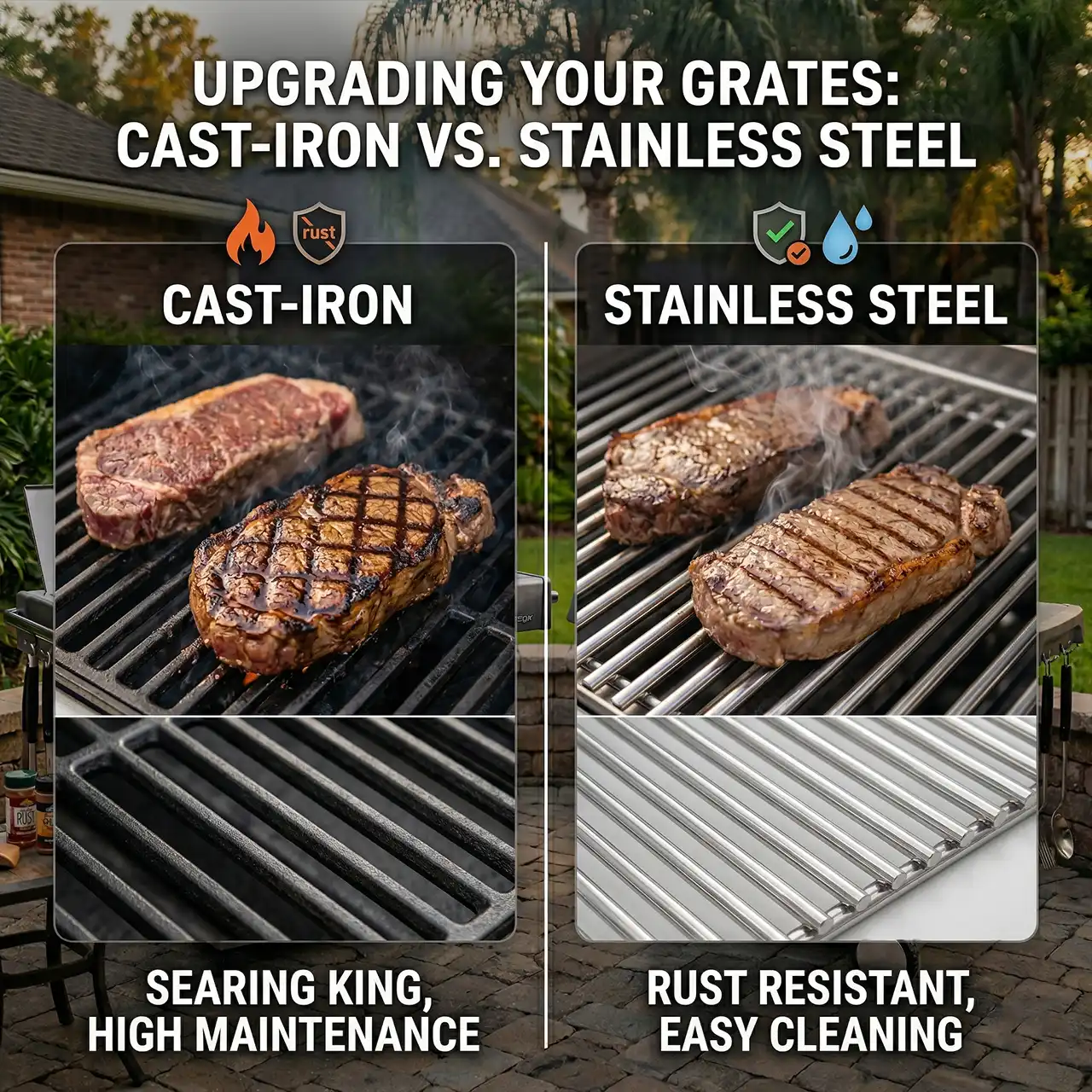
- Cast-Iron: The cast-iron grates produced exceptional, dark, wide sear marks within 90 seconds. The heat retention allowed us to cook multiple steaks back-to-back without the grate cooling down. The crust formation was superior, resulting in that classic “steakhouse” flavor and texture.
- Stainless Steel: The heavy-duty stainless steel grates produced good sear marks, but they were lighter and thinner than the cast-iron marks. The grill cooled down slightly when the meat was added, requiring a slightly longer cook time to achieve the desired crust.
Verdict on Searing: Cast-Iron is the undisputed winner. If your primary goal is the perfect sear on steaks and chops, there is no substitute for the heat retention of cast iron.
Test 2: Rust Resistance and Longevity (Maintenance)
We left both sets of grates outdoors, covered but exposed to humidity and occasional rain, for six months. We cleaned them regularly after use.
- Cast-Iron (Porcelain-Enameled): Despite our best efforts to oil them, small chips appeared in the porcelain coating near the edges after three months. Within six months, surface rust began to form in those chipped areas, requiring aggressive scrubbing and re-seasoning.
- Stainless Steel (304-Grade): The stainless steel grates showed no signs of rust whatsoever. They discolored from the heat (turning a golden-brown hue), which is normal, but they remained structurally perfect and easy to wipe clean.
Verdict on Rust Resistance: Stainless Steel is the undisputed winner. 304-grade stainless steel is highly resistant to corrosion and is designed to survive outdoors.
Maintenance Showdown
| Feature | Cast-Iron Grates | Stainless Steel Grates |
|---|---|---|
| Pre-Use | Requires oiling before every session. New raw grates require seasoning. | Brush and go. |
| Post-Use | Brush while hot, wipe with oil to protect. | Brush while hot. |
| Durability | Can crack if dropped. Porcelain can chip. | Very durable, won’t crack. Might warp if cheap quality. |
| Cleaning | Moderate. Do not use soap regularly. Needs immediate drying. | Easy. Soap and water are fine for deep cleans. |
Conclusion: Which Grate Should You Choose?
The best upgrade grate depends entirely on what you value most in your grilling experience.
You should choose Cast-Iron Grates if:
- You primarily grill steaks, burgers, and chops and crave those deep, dark sear marks.
- You enjoy the ritual of maintenance and seasoning your cookware.
- You want the heaviest-duty, classic grilling experience.
You should choose Stainless Steel Grates if:
- You value convenience and want a “brush and go” experience.
- You live in a high-humidity or coastal environment where rust is a major concern.
- You want a grate that will likely last the lifetime of your grill with minimal effort.
Simply Grilling Pro-Tip: Regardless of which grate you choose, invest in a high-quality grill cover to protect your entire investment from the elements!