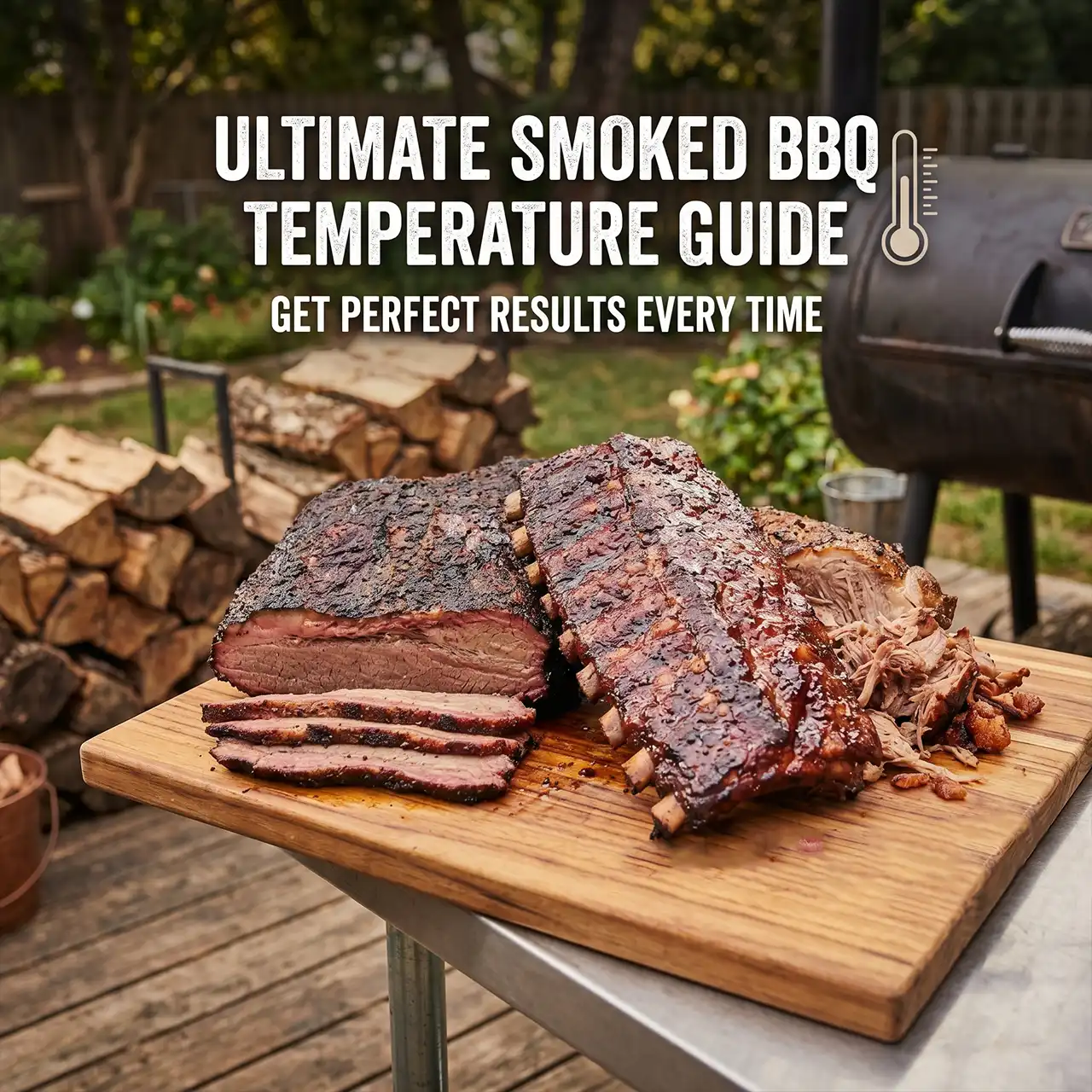
Whether you are a backyard beginner or a seasoned pitmaster, the secret to mouth-watering, fall-off-the-bone barbecue comes down to two variables: time and temperature. Cooking “low and slow” breaks down tough connective tissues, rendering the fat and leaving you with juicy, flavorful meat.
In this comprehensive meat smoking temperature guide, we’ll break down the ideal smoker temperatures and target internal temperatures for the most popular cuts of meat. Plus, we’ve included the must-have tools you need to elevate your BBQ game.
Essential Meat Smoking Tools You Need
Before you fire up the smoker, make sure you have the right gear. Guessing the temperature is the quickest way to ruin an expensive cut of meat. Here are the essential tools every pitmaster needs:
- Instant-Read Meat Thermometer: Absolutely crucial for spot-checking internal temperatures quickly without letting out too much heat from your smoker.
- Dual-Probe Wireless Thermometer: Allows you to monitor both the ambient temperature of your smoker and the internal temperature of your meat from your phone or a remote receiver.
- Pink Butcher Paper: Essential for wrapping brisket and pork shoulder to push through the dreaded “BBQ stall” while preserving a crispy bark.
- Heat-Resistant BBQ Gloves: Protect your hands when moving hot grates, adding charcoal, or handling large, hot cuts of meat.
The Master Meat Smoking Temperature Chart
Bookmark this smoking temperature chart! Getting the smoker dialed in is only half the battle; knowing exactly when to pull the meat off the grates is where the real magic happens.
| Type of Meat | Smoker Temperature | Target Internal Temperature | Estimated Time |
|---|---|---|---|
| Beef Brisket | 225°F – 250°F | 195°F – 205°F | 1 – 1.5 hrs per lb |
| Pork Butt / Shoulder | 225°F – 250°F | 195°F – 205°F | 1.5 hrs per lb |
| Pork Ribs (Baby Back or Spare) | 225°F – 250°F | 190°F – 200°F | 5 – 6 hours total |
| Whole Chicken | 250°F – 275°F | 165°F (Breast), 175°F (Thigh) | 3 – 4 hours |
| Turkey (Whole) | 275°F – 300°F | 165°F (Breast), 175°F (Thigh) | 30 – 40 mins per lb |
| Salmon (Hot Smoked) | 225°F | 145°F | 1 – 2 hours |
Understanding the “BBQ Stall”
If you are smoking a large cut of meat like a beef brisket or a pork shoulder, you will inevitably encounter the stall. This happens when the internal temperature of the meat hits around 150°F to 160°F and stops rising—sometimes for hours.
This is caused by evaporative cooling as the meat sweats. To overcome the stall, use the “Texas Crutch” method by wrapping your meat tightly in pink butcher paper or heavy-duty aluminum foil. This traps the moisture and pushes the meat’s temperature past the stall without drying it out.
Pro Tips for the Best Smoked Meat
- Always Cook to Temperature, Not Time: The estimated times in our smoking chart are just guidelines. The only way to guarantee perfectly smoked meat is by using a reliable meat thermometer.
- Don’t Peek: “If you’re lookin’, you ain’t cookin’.” Opening the lid lets valuable heat and smoke escape, adding unnecessary time to your cook.
- Rest Your Meat: Once you hit your target internal temperature, remove the meat from the smoker and let it rest. Resting allows the muscle fibers to relax and reabsorb juices. Let briskets and pork butts rest for at least 1-2 hours in an insulated cooler before slicing or pulling.
Final Thoughts
Mastering your smoker takes patience, practice, and precise temperature control. By using this meat smoking temperature guide and investing in high-quality tools, you’ll be well on your way to serving up competition-quality barbecue in your own backyard.