Stop Guessing: The Critical Grilling Temperature Guide
The biggest lie in outdoor cooking is that you can judge doneness by “feel,” “poke,” or time. You cannot. Those methods are invitations to disappointment—dry chicken, grey steak, and wasted money.
Grilling is engineering and chemistry. Your goal is specific: rendering intramuscular fat, denaturing connective tissue (collagen), and achieving perfect, glistening texture—all while ensuring food safety.
You cannot command these processes without data. Close this article immediately if you do not own a quality, validated instant-read thermometer. If you do, pay attention. Here is your definitive grid of target pull temperatures and resting expectations.
Two Rules You Must Master
1. Carryover Cooking is Real
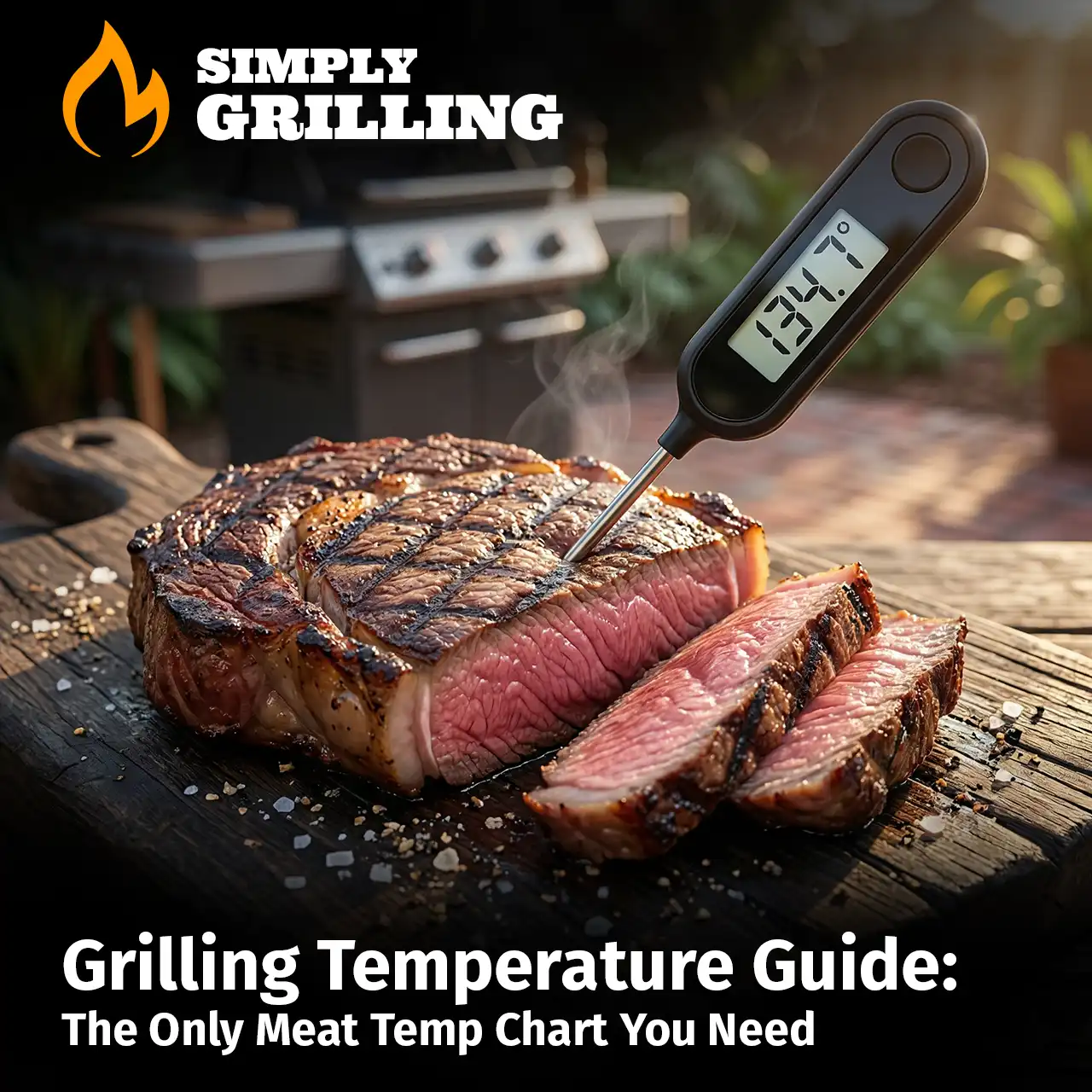
Meat does not stop cooking when you take it off the heat. Residual energy continues to push the internal temperature upward. For thick cuts (steaks, roasts, pork chops), you must pull the meat 5°F before your final desired target to allow for this rise during the rest.
2. The Rest is Non-Negotiable
If you slice immediatey, you fail. Resting (10 minutes for steaks, up to 1 hour for larger briskets or pork shoulders) allows muscle fibers to relax and re-absorb the moisture (juices) that were driven to the center during cooking. Skipping this leaves you with dry meat and a juicy cutting board.
The SimplyGrilling.com Definitive Temperature Grid
| Protein / Cut | Pull Temp (Target) | Resting Temp (Final) | Texture / Uncompromising Verdict |
|---|---|---|---|
| Beef: Steak (Ribeye, Strip, Filet) | 130°F – 135°F | 135°F – 140°F (Medium-Rare) | The Gold Standard. Edge-to-edge pink, rendered fat. Anything higher is leather. |
| Beef: Burgers (Ground) | 155°F – 160°F | 160°F (USDA Safe) | Non-negotiable for food safety. The grinding process introduces surface pathogens to the core. Cook it safe. |
| Chicken: Breast (Boneless) | 160°F | 165°F | The danger zone. Lean meat dries instantly. Pull at 160°F; the rest brings it to safety while preserving moisture. |
| Chicken: Thighs / Legs (Dark) | 175°F – 180°F | 180°F – 185°F | High collagen requires time. Cooking to 180°F+ liquefies connective tissue, keeping dark meat succulent, not chewy. |
| Pork: Chops / Loin (Modern) | 140°F | 145°F (Medium) | A glistening pink blush. The old 165°F standard is archaic and ruins tender pork. Rest to 145°F and trust the data. |
| Pork: Butt / Shoulder (Pulled) | 200°F – 203°F | 203°F – 205°F | The chemistry of shredding. Pure collagen rendering required. 203°F is the magic number where the bone slips out clean. Requires long rest. |
| Fish: Salmon / Tuna (Opaque) | 125°F – 130°F | 130°F – 135°F | Opaque and flaky. Searing the outside while keeping the center tender. Do not overcook fish; it is fragile. |
The Verdict on Safety vs. Perfection
We respect the science of food safety, but we do not respect mediocrity. The FDA safety temperature for chicken is 165°F. However, pulling a lean breast at 165°F ensures it will carry over to 170°F+. Pulling at 160°F and letting the rest carry it to 165°F is safe, accurate, and professional. Defend your juices. Know your data. Never compromise.