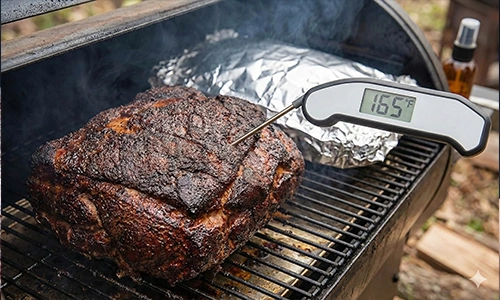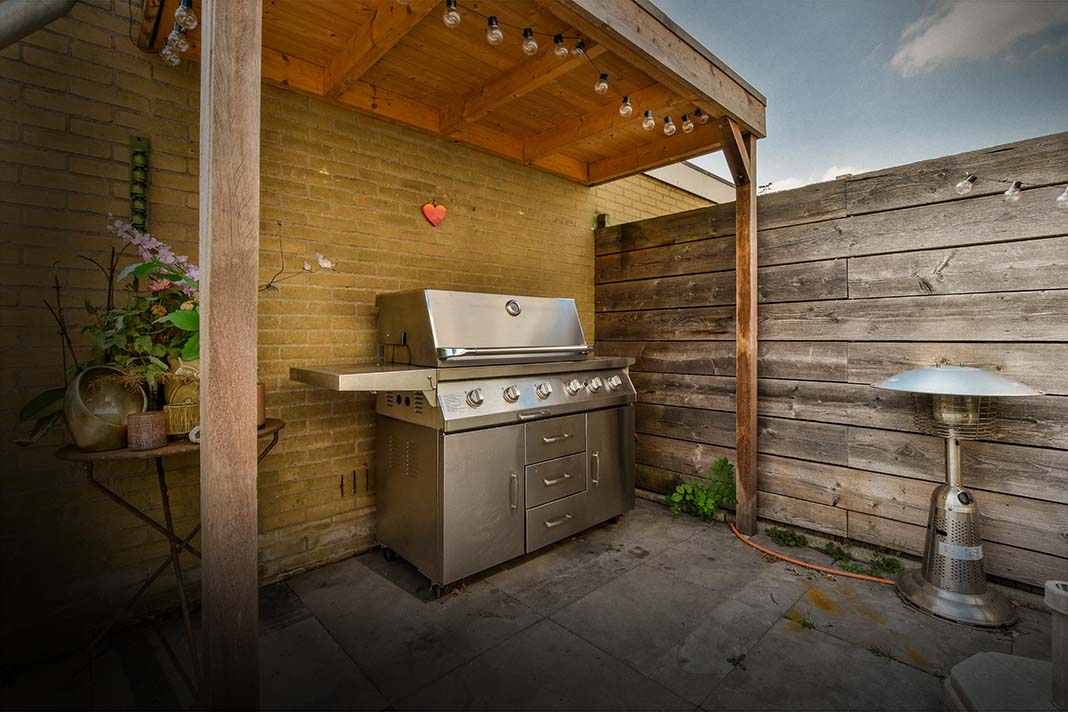
A great cook doesn’t begin when the meat hits the grates; it begins the moment you step into your workspace. If you approach barbecue with the respect the craft demands, your outdoor kitchen shouldn’t be treated as just a patio—it is a workshop. It is the forge where fire, smoke, and seasoning meet to create something legendary.
Whether you are working with a sprawling outdoor setup or a simple kettle grill and a solid wooden prep table, organizing your space, protecting your ingredients, and maintaining your tools are the non-negotiable first steps to achieving the perfect bark.
Here is how to build and maintain a functional, uncompromising outdoor workspace.
1. Organizing the Workspace: Deliberate Workflow
In a professional kitchen, they call it mise en place—everything in its place. When you are managing a 500-degree live fire, you don’t have time to go hunting for your tongs or your digital thermometer.
- Establish the Zones: Divide your outdoor space into three distinct areas: the Prep Zone (clean cutting boards, raw meat, seasoning), the Fire Zone (the grill/smoker and fuel storage), and the Landing Zone (resting boards, clean knives, serving platters).
- Keep the Essentials at Arm’s Reach: Your heavy-duty tongs, a reliable instant-read thermometer, and your foundational spice blends should be immediately accessible from the Fire Zone.
- Weather-Proof Storage: If your setup is permanently outdoors, invest in sealed, weatherproof cabinetry or heavy-duty locking bins to keep out pests, pollen, and the elements.
2. Preserving the Foundation: Spice and Rub Storage
Small-batch, artisanal rubs like the ones we craft at The Original Grillers Co. rely on the purity of their ingredients. Because we refuse to use artificial anti-caking agents or chemical preservatives, it is entirely up to you to protect your blends from their three biggest enemies: Heat, Light, and Moisture.
- Defeat the Humidity: If you are cooking in a humid climate (like our home base here in Florida), moisture is your biggest threat. It causes pure sugars to clump and salt to sweat. Always ensure the lids are screwed on tight immediately after use. If you store your rubs outside, keep them in a completely watertight, airtight container.
- Step Away from the Fire: Never store your spice blends directly above or right next to your grill. The ambient heat will slowly cook the essential oils right out of the black pepper and garlic, dulling the flavor profile long before it ever hits the meat.
- Embrace the Dark: UV light degrades the rich colors and flavors of spices like smoked paprika and chili powder. Store your bottles in a dark cabinet or a dedicated, shaded pantry box when not in active use.
Pro Tip:
Never shake a bottle of rub directly over a steaming-hot piece of meat still on the grill. The steam will shoot straight up into the bottle, introducing moisture that will turn your premium rub into a solid brick. Season on the prep board, not over the fire.
3. Caring for the Iron and Steel: Vintage Tool Maintenance
A craftsman is only as good as their tools. If you are using heritage-quality gear—like heavy cast-iron skillets, carbon steel carving knives, and thick wooden cutting boards—they require a specific ritual of care to last generations.
- Cast Iron & Carbon Steel: Water is the enemy of raw iron and steel. Never put these tools in a dishwasher. After a cook, wash them by hand using hot water and a stiff brush (a little coarse kosher salt works wonders as an abrasive scraper for stuck-on bits). Dry them immediately and completely, then wipe them down with a very light coat of neutral, high-smoke-point oil (like canola or grapeseed) before storing.
- The Wooden Block: A thick, end-grain butcher block is the ultimate resting and slicing surface, but the heat and outdoor air will dry it out, causing it to crack and split. Once a month, wipe down your clean, dry wooden boards with food-grade mineral oil or a beeswax board butter.
- Sharpen the Steel: A dull knife damages the meat, squeezing out the juices you spent 12 hours trying to preserve. Keep a honing steel in your outdoor kit and use it before carving every single time.
The Bottom Line
Great barbecue is about controlling the variables. By keeping your workspace highly organized, fiercely protecting the integrity of your spice blends, and maintaining your tools with old-school discipline, you eliminate the guesswork. All that is left to do is light the fire and build the bark.