The Great American Sauce Debate: Carolina Gold vs. Texas Red vs. Alabama White
(A Guide to Starting Fights at Your Next Cookout)
There are three things you should never discuss with strangers: religion, politics, and regional barbecue sauce. In the world of uncompromising outdoor cooking, sauce is a highly volatile subject.
Let’s establish the ground rules first: Good barbecue does not need sauce. If you have properly managed your fire, nailed your internal temps, and built a respectable bark, the meat speaks for itself. Sauce is an accent, a compliment, a gentle handshake. It is not a thick, high-fructose corn syrup blanket meant to hide the fact that you turned a $60 pork butt into a dry, flavorless meteorite.
That said, the regional sauces of the American South are culinary treasures. Today, we are tearing into the holy trinity of regional sauces. Pick your side.
1. South Carolina Gold: The Yellow Menace
If you hand a bottle of this to a Texan, they will assume you brought them a condiment for a cheap hot dog. They are wrong. South Carolina Gold is a masterpiece of balance. Tracing its roots back to 18th-century German immigrants who brought their love of mustard to the Carolinas, this sauce is a sharp, tangy, slightly sweet concoction.
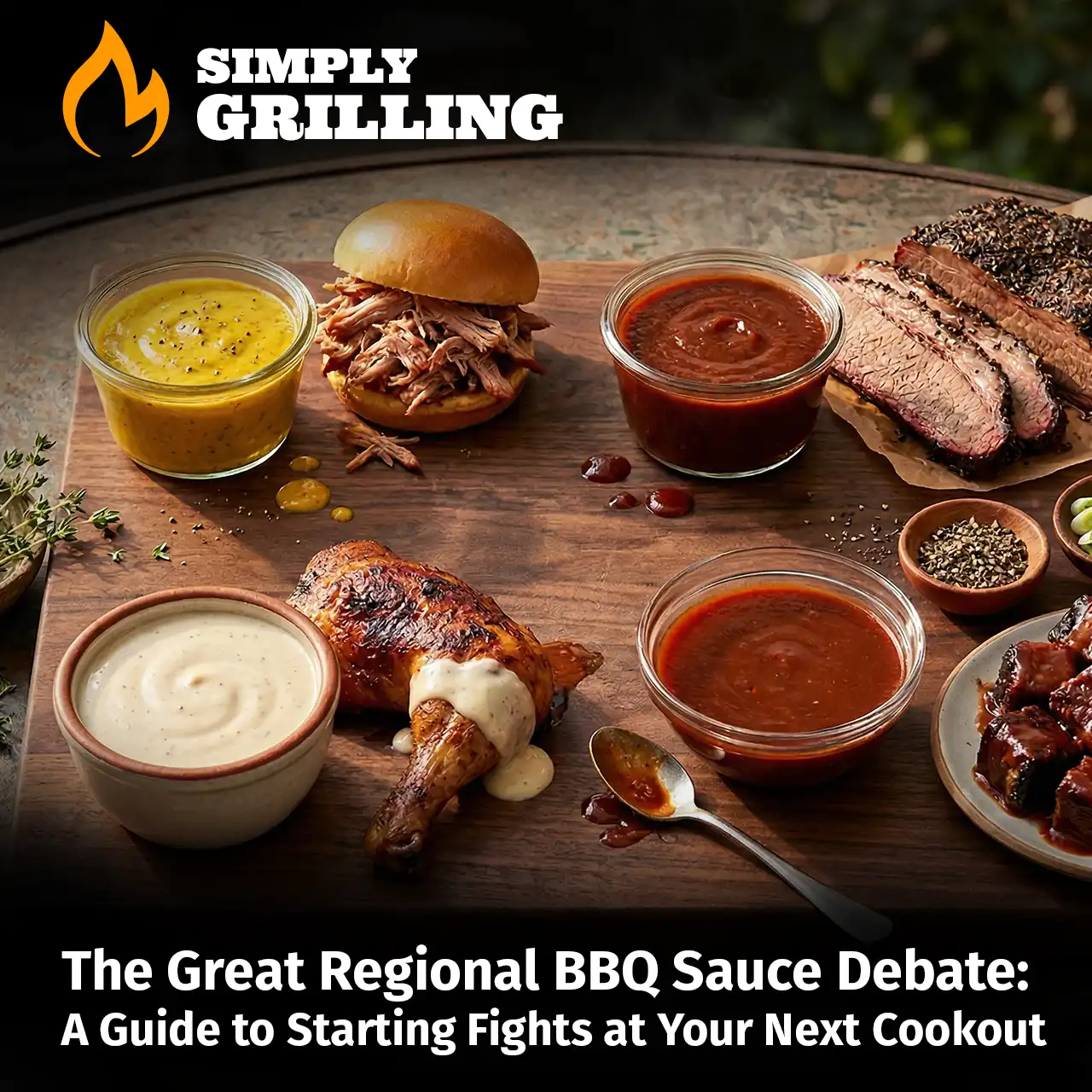
The Profile: Yellow mustard, apple cider vinegar, brown sugar, and a heavy hit of black pepper.
The Verdict: It cuts through the heavy, rich fat of a smoked pork shoulder better than anything else on the planet. If you are serving pulled pork and you aren’t offering a mustard sauce, you are doing your guests a disservice.
The Commercial Standard:
If you refuse to whisk it yourself, buy Lillie’s Q Gold BBQ Sauce. It respects the mustard heritage without drowning it in fake sugar.
2. Texas Red: The Apologetic Sauce
Let’s be perfectly clear: In Central Texas, asking for sauce is a subtle way of telling the pitmaster that their brisket is dry and their life is a failure. Authentic Texas barbecue is about post oak smoke, aggressively coarse black pepper, and rendered beef fat.
However, when Texans do make sauce, it is not the thick, molasses-heavy Kansas City sludge you buy at the grocery store. Authentic Texas Red is thin, savory, and meant to be a mop or a light dip. It exists to complement the beef, not overpower the bark.
The Profile: Tomato/ketchup base, but cut heavily with vinegar, meat drippings, cumin, chili powder, and an offensive amount of black pepper.
The Verdict: It’s a savory, beefy elixir. Use it on brisket (if you must), beef ribs, or smoked sausage.
The Commercial Standard:
Don’t buy generic ketchup syrup. Get Franklin Barbecue Texas Style BBQ Sauce. Aaron Franklin knows a thing or two about beef.
3. Alabama White: The Culinary War Crime That Works
To the uninitiated, the idea of slapping a mayonnaise-based sauce onto smoked meat sounds disgusting. It sounds like something a desperate college student invented at 2:00 AM. But you must trust the process. Invented by Big Bob Gibson in Decatur, Alabama, in 1925, this sauce is a cult classic for a very specific reason: smoked chicken.
When you smoke poultry, the skin often turns rubbery and the lean meat dries out. Alabama White sauce solves this. You literally dunk the hot, smoked chicken directly into the vat of sauce. The heat of the bird melts the oils in the mayo, turning it into a rich, tangy glaze that clings to the meat.
The Profile: Mayonnaise, apple cider vinegar, lemon juice, heavy black pepper, and sometimes a kick of horseradish or cayenne.
The Verdict: Keep it away from beef. Keep it away from pork. But if you are smoking a whole bird, this will change your life.
The Commercial Standard:
There is only one acceptable answer here: Big Bob Gibson Original White Sauce. Respect the originator.
The Final Word
Stop buying cheap, mass-produced sauces that list high-fructose corn syrup as the first ingredient. They burn on the grill and ruin your bark. A serious pitmaster understands that different proteins require different chemistry. Match the acidity and fat content of your sauce to the meat you are pulling off the pit. Know your data, respect the history, and never compromise.